
English

Views: 0 Author: Site Editor Publish Time: 2026-08-26 Origin: Site


Brands are shifting away from cheap, disposable promotional items. They now favor high-durability, custom-molded tactile merchandise. This shift makes sense in today's competitive landscape. You need products capturing attention long after initial contact. Well-designed custom PVC keychains offer incredible utility as high-retention brand assets. Their weather resistance, flexibility, and precise color-matching capabilities keep brands visible daily. Poorly planned merchandise often ends up in landfills. Properly executed tactile goods generate lasting impressions. This article serves as a technical and strategic guide. We will explore design options, material safety standards, and supplier capabilities. B2B buyers, event organizers, and retail merchandisers will learn exactly how to align specifications with business goals.
Strategic Alignment: Design and hardware choices must directly map to the end-use case—whether prioritizing unit cost for event giveaways or perceived value for retail keychains.
Dimensional Choices: The decision between 2D layered and 3D sculpted PVC impacts mold fees, production timelines, and overall visual fidelity.
Quality & Compliance: Reliable sourcing requires verifying phthalate-free PVC materials, precise Pantone (PMS) color matching, and hardware tensile strength.
Production Realities: Tooling costs, minimum order quantities (MOQs), and physical sampling phases are standard requirements that must be factored into project timelines.
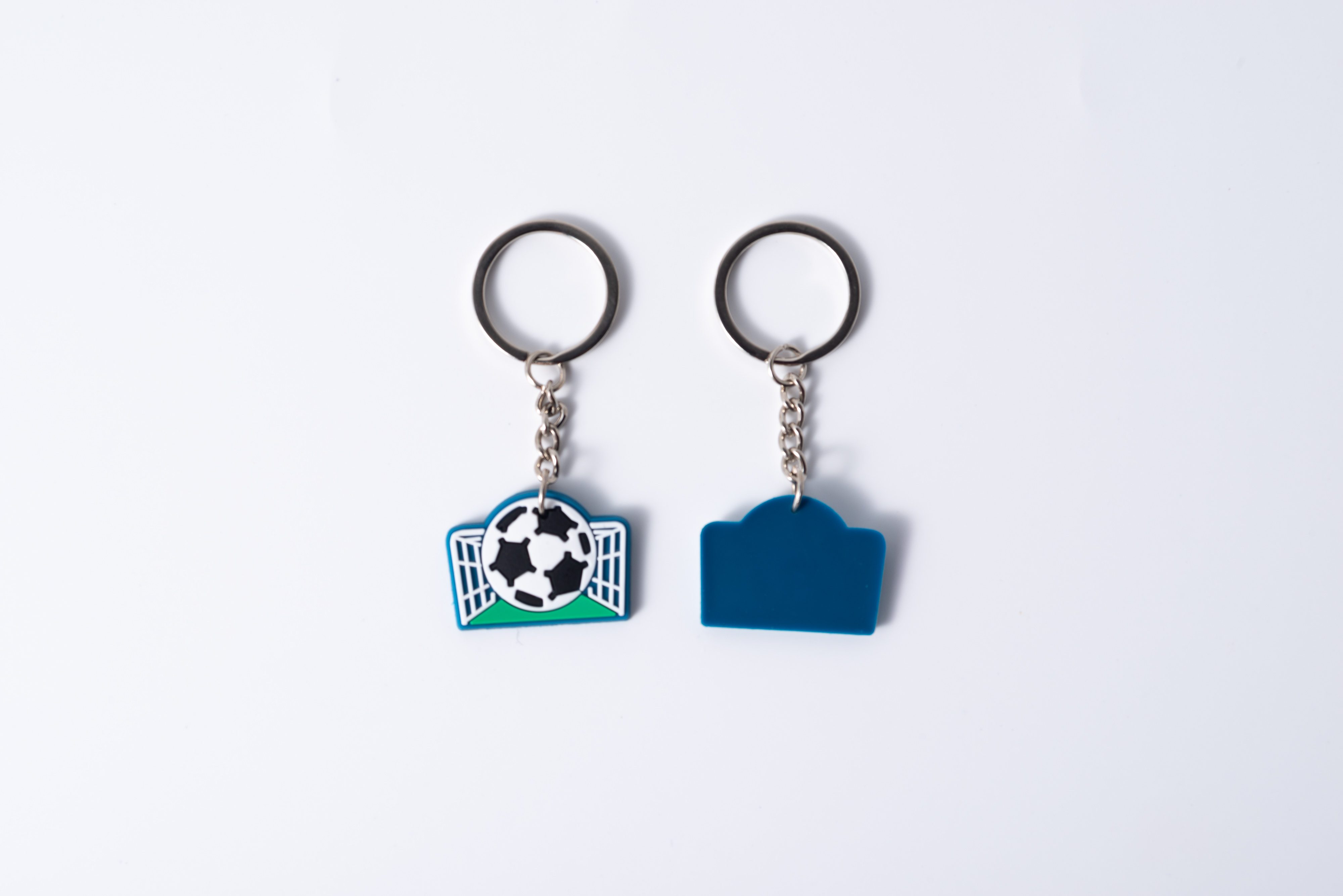
Merchandise strategies fail when production specs ignore the final use case. A giveaway needs different engineering than a retail product. You must align your design choices with your underlying business objective. We categorize these objectives into three primary buckets.
Volume matters most here. You want maximum brand visibility for the lowest possible spend. Success depends on achieving a low per-unit cost and rapid production. High brand recall remains essential. Promotional PVC keychains thrive on simplicity. Keep the design straightforward to minimize errors.
We recommend standardizing on 2D designs. Limit your color palette to under four colors. Every additional color increases production time and material cost. Standard split-ring hardware works perfectly for this tier. Avoid complex cutouts. Clean, bold logos deliver the best return on investment at scale.
Conferences demand interactive merchandise. Success criteria include easy distribution, thematic relevance, and durability during active use. Attendees attach these items to lanyards and backpacks immediately. They must withstand constant handling. Event keychains act as functional souvenirs.
Consider integrating technology to boost engagement. Print a QR code on the reverse flat side. This links directly to event schedules or lead-capture forms. Custom backing cards also elevate the presentation. They provide extra space for sponsor logos or contest rules. This approach turns a simple souvenir into a direct marketing channel.
Retail environments demand premium execution. Consumers will not pay for flimsy materials. Success requires high perceived value, complex detailing, and retail-ready packaging. Retail keychains represent your brand's commitment to quality. Cut corners here, and buyers will notice.
We strongly recommend 3D modeling for direct-to-consumer items. Upgrade the hardware immediately. Matte black carabiners or gold lobster clasps justify higher retail prices. Double-sided designs feel substantial in hand. You must also ensure compliance-certified materials. Retailers often require strict documentation before stocking your items.
Understanding molding limitations saves weeks of revision time. Soft PVC liquid cures inside CNC-machined metal molds. The depth and shape of these molds dictate your final product. You must choose between 2D and 3D formats early.
A 2D design features a flat base. Colored layers sit raised above this base. Ridges separate different design elements. This physical separation prevents liquid colors from bleeding together.
This format suits logos, bold typography, and clean graphic illustrations. It remains the industry standard. Lower mold fees make 2D highly attractive for tight budgets. Factories set up 2D runs much faster. You can scale for bulk orders without facing massive tooling bottlenecks.
A 3D design utilizes sculpted, rounded surfaces. It offers varying depths. The final product resembles a miniature figurine or bas-relief sculpture. The tactile experience feels inherently premium.
Choose 3D for character designs, mascots, and product replicas. However, you must accept certain implications. Initial tooling costs run much higher. Sampling periods take longer because mold adjustments require meticulous CNC recalibration. Per-unit costs increase slightly. If you want a double-sided 3D item, the factory must perfectly align distinct front and back molds.
Design Format Comparison Chart
Feature | 2D Custom PVC | 3D Custom PVC |
|---|---|---|
Surface Structure | Flat base, raised layered elements | Sculpted, rounded, variable depth |
Best Use Cases | Corporate logos, typography, simple icons | Mascots, miniatures, character models |
Tooling Cost | Low to Moderate | High |
Production Speed | Fast (Ideal for tight deadlines) | Slower (Requires complex mold curing) |
Perceived Value | Standard | Premium / Retail Grade |
Soft PVC requires solid Pantone (PMS) colors. You must provide exact PMS codes to your supplier. Factory workers mix liquid PVC to match these specific codes before injection.
Standard liquid injection cannot achieve gradients or shading. You cannot print photographic images into the molded rubber. Mold ridges must physically separate every color boundary. If your logo features a gradient, you must simplify it into solid color blocks. Experienced designers understand this limitation. They adapt artwork accordingly before submitting technical files.
A great design fails if the materials fall apart. Poorly sourced PVC poses safety risks and ruins brand reputation. Evaluating physical quality ensures your merchandise survives daily use.
Material safety is crucial for retail environments. Kids often handle promotional merchandise. You cannot risk toxic exposure. Highlight the importance of sourcing phthalate-free materials. Phthalates soften plastics but carry severe health warnings.
Always demand RoHS-compliant or Proposition 65-compliant PVC. California's Proposition 65 enforces strict limits on harmful chemicals. Retailers will reject non-compliant inventory instantly. Securing safety certificates protects your business from legal liabilities.
Thin rubber tears easily. Evaluate the thickness of the PVC base carefully. The industry standard ranges from 3mm to 4mm. Ensure the design maintains this thickness at the attachment loop. The loop experiences the most daily stress.
Discuss UV resistance with your manufacturer. Cheap dyes fade quickly under direct sunlight. UV-resistant PVC prevents color degradation over time. Your brand colors should remain vibrant after months of outdoor exposure.
The metal jump ring connects the PVC loop to the main key ring. This connection point represents the most common point of failure. Poorly manufactured items use thin, weak jump rings. They bend open when snagged on a pocket.
Assess the hardware tensile strength. Request thicker gauge metal for the jump ring. A lost keychain provides zero brand value. Strong hardware guarantees the product stays attached to the user's belongings.
Common Mistake: Approving thin, unhardened jump rings to save pennies.
Best Practice: Specify reinforced, double-looped jump rings for heavy 3D designs.
The attachment mechanism defines the user experience. Upgrading the hardware transforms an average giveaway into a desirable accessory. Review these primary options before finalizing your order.
Standard Split Ring (25mm/30mm): This remains the most cost-effective choice. It serves as the industry standard. Use it for high-volume promotional runs where budget dictates decisions.
Lobster Clasps and Carabiners: These offer much higher perceived value. They clip easily onto backpacks, lanyards, and belt loops. They represent the ideal choice for retail and bag-clip usage.
Swivel Chains: A swivel mechanism prevents key tangling. It significantly reduces torque stress on the PVC loop. This extends the lifespan of the item.
The back of your item offers valuable real estate. Do not leave it blank without reason. You have two main approaches for reverse side utilization.
First, consider printed backs. Silkscreen printing on the flat reverse side adds massive utility. You can print website URLs, legal copy, or customer service contact info. This approach keeps the front design clean while delivering necessary text.
Second, consider double-sided PVC. This process injects PVC on both sides of the mold. It requires thicker construction. It also demands dual CNC molds. Double-sided items feel heavier and more premium. They look correct no matter how they hang.
Navigating the production process requires understanding factory economics. Misjudging timelines or mold fees derails entire marketing campaigns.
Every unique design requires a custom CNC-cut metal mold. Factories carve your design into solid steel or aluminum. This represents a fixed sunk cost. You pay this fee regardless of your order volume.
A run of 100 units requires the same mold as a run of 10,000 units. Therefore, higher volumes distribute the tooling cost more efficiently. Ask your supplier if they keep molds for future reorders. Most reliable factories store molds for two years, waiving setup fees on repeat business.
Always demand a digital mock-up first. This document verifies dimensions, color boundaries, and PMS codes. Do not authorize mold creation until you approve this digital proof.
For orders exceeding 1,000 units, mandate a physical sample phase. You must verify color curing and hardware attachment in person. Computer screens display colors differently than cured rubber. A physical sample prevents massive production disasters.
Realistic scheduling prevents shipping anxiety. Account for one to two weeks just for mold creation and sampling. Once you approve the sample, mass production requires another two to four weeks.
If you opt for overseas manufacturing, transit times add significant delays. Ocean freight takes weeks. Air freight costs a premium. Highlight the risk of supply chain delays if you operate without a buffer. Always build an extra two weeks into your procurement timeline.
Choosing the wrong vendor leads to missed deadlines and poor quality. You must evaluate suppliers systematically. Follow these exact steps to ensure a smooth transaction.
Do not accept vague promises. Ask hard questions during the quoting phase. Reliable vendors answer these quickly and transparently.
Do they own their manufacturing facility or are they brokering? Direct manufacturers offer better communication and lower costs.
What are their exact minimum order quantities (MOQs) for custom molds?
Do they guarantee exact PMS color matching, or do they use closest-available stock colors?
Can they provide material safety compliance certificates upon request?
Factories cannot use flat JPEGs or PNGs for mold creation. State the necessity of submitting vector artwork. You must provide .AI, .EPS, or .SVG files.
Ensure all text is outlined. If you forget this step, the factory's computer might replace your brand font with a generic default. Separate your colors clearly. Simplify intricate details. Factory engineers will revise overly complex artwork, which delays your project.
A detailed purchase order eliminates ambiguity. Do not leave assumptions open to interpretation. Your final spec sheet must explicitly list all project parameters.
Document the exact dimensions (Length x Width x Depth). List every exact PMS code used in the design. Specify the exact hardware type, including metal finish (e.g., silver nickel or matte black). Finally, state your required packaging. Bulk bags save money, but individual polybags protect items from scratching during transit.
Successful procurement requires balancing design complexity with unit economics. You must understand how your design translates into physical molds. Simple artwork paired with strong hardware often outperforms complex, fragile designs.
Aligning hardware, material compliance, and dimensional choices with the specific end-use drives your return on investment. Giveaways require cost-efficiency. Retail goods demand premium execution and safety certifications.
Take action by organizing your vector files now. Outline your text and assign PMS colors. Contact shortlisted, compliance-verified vendors. Always request a physical sample before approving mass production. Careful planning guarantees merchandise your audience actually wants to keep.
A: Most factories require an MOQ of 100 to 250 units. Tooling costs make smaller runs economically unviable. Higher volumes significantly reduce the per-unit price by absorbing the fixed mold fee.
A: Expect a 4-to-6-week end-to-end timeline. Digital proofing and physical sampling take 1-2 weeks. Mass production requires 2-3 weeks. Shipping adds 1-2 weeks depending on air or ocean freight choices.
A: Standard injection molding cannot produce gradients or photographs. Colors must be solid PMS blocks separated by physical rubber ridges. If gradients are mandatory, consider offset-printed acrylic instead.
A: Mold fees are generally a one-time cost. Reputable factories store your CNC molds for 1 to 2 years. If you reorder the exact same design within that window, you avoid paying tooling fees again.
A: It is safe only if you specify compliance. You must request phthalate-free, non-toxic PVC. Ensure the supplier provides RoHS or Proposition 65 compliance certificates before distributing items to children.