
English

Views: 0 Author: Site Editor Publish Time: 2026-08-23 Origin: Site


Traditional woven and embroidered patches often fail when deployed in harsh environments. Thread-based designs quickly succumb to heavy fraying against rocks and brush. They retain thick mud and suffer from severe waterlogging after heavy rain. These operational failures compromise gear functionality. They also degrade brand visibility when teams operate off-grid. To solve this, industry leaders now rely on custom PVC patches for outdoor gear. They provide a rugged, weather-resistant solution for extreme conditions. They outlast fabric alternatives by years, maintaining crisp legibility in the dirtiest environments. This article critically evaluates the unique material properties of molded plastics. We will guide you through strict design constraints, reliable attachment methods, and smart procurement logic. You will learn exactly how to specify materials for tactical equipment and technical outerwear. We aim to ensure your branding achieves peak performance in the field.
Durability First: PVC eliminates the fraying and waterlogging associated with traditional thread-based patches.
Material Nuance: Evaluate standard PVC against TPU patches if European environmental compliance (REACH) or extreme flexibility is required.
Design Realities: Bold, simplified vector designs with solid Pantone colors perform best; micro-text and gradients will fail in the molding process.
Modularity: Velcro patches (hook-and-loop) remain the most scalable attachment method for tactical and modular outdoor systems.
Outdoor equipment faces brutal environmental challenges daily. Fabric patches absorb moisture, catch on branches, and degrade under intense sunlight. Molded polymers solve these core business problems entirely. Manufacturers measure success by a patch's ability to remain legible, intact, and structurally sound over a product's entire lifecycle.
Non-porous surfaces prevent weight gain in wet environments. Fabric patches act like sponges during heavy storms. They soak up water, take hours to dry, and harbor mildew. This retained moisture often leads to mold growth on expensive gear. Using waterproof PVC patches eliminates this risk completely. Water simply beads up and rolls off the rubberized surface. This keeps loadouts light and prevents bacterial odors from developing in damp conditions.
Polyvinyl chloride possesses excellent chemical stability. It resists fading even under prolonged sun exposure. UV degradation destroys standard thread colors in a matter of months, leaving logos washed out. PVC maintains vibrant, factory-fresh pigments for years. The material also resists physical scratching. When you drag gear against jagged rocks, concrete walls, or thick brush, the patch absorbs the impact without tearing or unraveling.
Field maintenance must remain simple and fast. Operational gear routinely encounters mud, grease, and debris. You cannot easily wash a stained embroidered crest without heavy scrubbing. However, PVC offers a simple wipe-clean surface. A quick rinse with a canteen or a wipe with a damp cloth restores the patch to its original condition. This efficiency saves valuable time for end-users. It also keeps your brand looking professional in highly demanding scenarios.
Different environments demand tailored branding solutions. The right patch placement enhances both functional utility and aesthetic appeal across various equipment categories.
Military, law enforcement, and simulation operators require clear, instantly recognizable identification. These environments demand low-glare finishes and rugged durability.
Plate Carriers: Operators mount morale patches and unit identifiers on chest panels for quick team recognition.
Tactical Vests: High-visibility medical insignias or rank markers attach to MOLLE webbing.
Helmet Covers: Small infrared (IR) or high-contrast PVC identifiers aid in nighttime operations.
Apparel brands integrate molded rubber elements into high-end clothing. These patches must withstand freezing temperatures and constant fabric flexing.
Waterproof Shell Jackets: Brand logos sit cleanly on sleeves or chest pockets without puncturing waterproof membranes.
Waders: Chest identifiers for fly-fishing gear endure constant submersion in river water.
Extreme-Weather Parkas: Thick zip-pulls and shoulder insignias provide a premium, tactile feel even when users wear heavy winter gloves.
Heavy-duty equipment requires equally robust branding. You must match the patch substrate flexibility to the underlying gear fabric.
Dry Bags: Welded patches maintain the bag's structural integrity and waterproof seal.
Hiking Backpacks: Large brand crests resist abrasion when users drop bags onto rough terrain.
Canvas Tents: Exterior logos survive intense UV exposure and the mechanical stress of seasonal packing and unpacking.
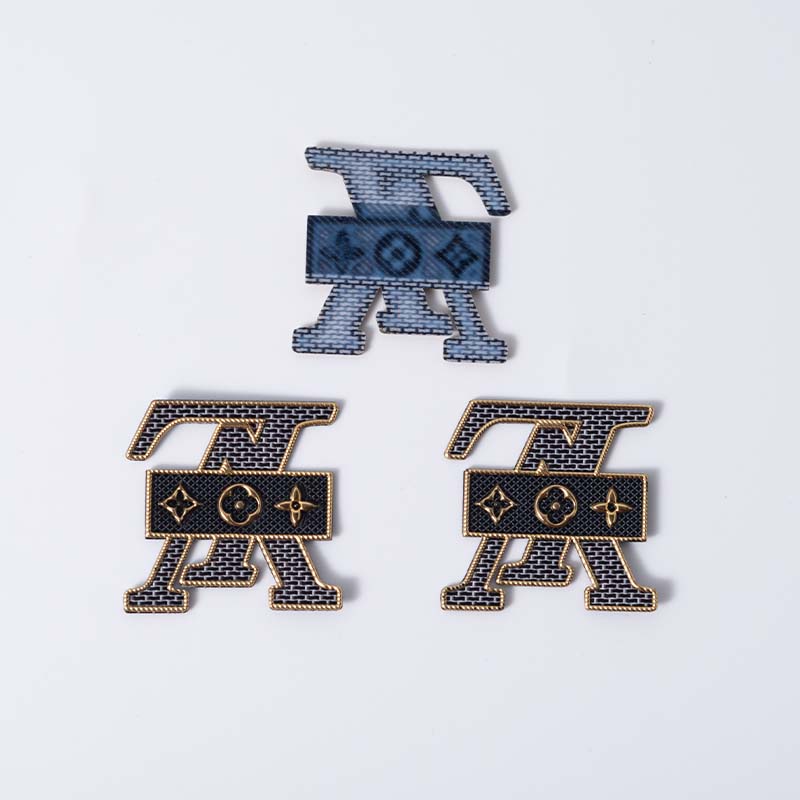
Choosing the right polymer blend determines field performance and regulatory compliance. You must weigh upfront costs against environmental requirements and specific temperature ratings.
Standard polyvinyl chloride remains the industry favorite. It is highly cost-effective for large production runs. The material excels at capturing deep 3D relief, creating striking, sculptural brand logos. Standard PVC proves highly durable for most North American outdoor applications. It easily handles heavy rain, moderate cold, and rough handling. For most standard tactical gear, it offers the best return on investment.
Thermoplastic Polyurethane offers a premium substitute. We define TPU patches as the eco-friendlier, high-performance alternative to traditional PVC. TPU contains fewer toxic plasticizers and phthalates. It boasts a smoother, slightly more refined finish with excellent elasticity. Many high-end alpine and technical apparel brands prefer it due to its superior mechanical properties and cleaner manufacturing footprint.
You should upgrade to TPU under specific operational and commercial scenarios. European markets strictly enforce REACH compliance for consumer goods. Standard PVC often fails these chemical safety audits, whereas TPU passes easily. Furthermore, TPU offers extreme cold-weather flexibility. Standard PVC can stiffen and crack in sub-zero alpine environments. TPU remains supple, preventing cracking and flaking. It also boasts a significantly lower overall environmental impact, appealing to eco-conscious consumers.
Table 1: Material Comparison - Standard PVC vs. TPU
Feature | Standard PVC | TPU (Thermoplastic Polyurethane) |
|---|---|---|
Cost Profile | Highly economical for bulk orders. | Premium pricing; higher material costs. |
Cold Weather Performance | Can stiffen in sub-zero conditions. | Remains highly flexible without cracking. |
Environmental Compliance | Often fails EU REACH regulations. | Fully REACH compliant; eco-friendly. |
3D Relief Capability | Excellent deep sculpting and texturing. | Good, but slightly softer edge definition. |
Molded plastics require specific design rules. You cannot simply copy an embroidered digital file and expect it to work. Liquid molding introduces unique physical constraints that dictate line thickness and color separation.
You must choose between flat-layered designs and sculpted reliefs. A 2D design features distinct, flat layers of color. They stack like a topographic map, creating clean, sharp borders. A 3D design features rounded, domed elements. It offers a sculpted, tactile feel that pops off the gear. Note that 3D manufacturing requires higher mold fees. The CNC machining process takes much longer to carve rounded cavities than flat trenches.
Liquid PVC molding requires solid Pantone (PMS) colors. You must separate every single color with a physical recess or a raised line. Gradients, shading, and watercolor effects are physically impossible in this medium. The liquid colored polymers would simply bleed together during the baking process. You must convert any digital gradients in your logo into solid, distinct color blocks.
Overly complex crests will fail during production. You must avoid micro-text and razor-thin detailing. Liquid rubber cannot flow into microscopic mold cavities. Complex designs usually result in unreadable blobs and manufacturing defects.
Minimum Line Thickness: Keep all raised lines thicker than 0.2mm to ensure structural integrity.
Font Size: Keep text above 12pt (approximately 1/4 inch high) for legibility.
Spacing: Ensure adequate negative space between letters so the mold walls can separate the colors cleanly.
Use high-contrast colors to maximize legibility from a distance.
Limit your palette to 4-6 solid Pantone colors to keep costs low.
Always submit scalable vector files (AI, EPS, or SVG) to your manufacturer.
Submitting low-resolution raster images (JPEG/PNG) instead of vectors.
Including tiny trademark (™) or copyright (©) symbols that cannot be molded.
Attempting photographic reproduction or complex shading.
A rugged patch holds no value if it falls off in the field. You must match the attachment method to the end-use environment and the base gear's fabric.
This system remains the undisputed industry standard for modularity. Tactical and outdoor users love swapping gear identifiers based on their current mission or activity. You should always order Velcro patches with the loop side included in the order. Your manufacturer can then sew this loop base directly onto backpacks, plate carriers, or jackets. This guarantees a perfect size match. The hook backing on the patch itself provides an incredibly strong grip that withstands heavy movement.
Permanent attachment demands a distinct structural approach. We strongly recommend adding a recessed sewing channel to your design. This creates a thin, pre-molded border groove around the patch edge. A sewing needle can easily punch through this thin trench. It prevents the needle from gumming up or breaking against thick, solid rubber. This method works perfectly for dry bags, canvas tents, and technical jackets. It secures the branding tightly without compromising the gear's overall integrity.
We strongly advise against heat-seal or peel-and-stick adhesive backings for true outdoor gear. These glues suffer severe limitations in the wild. Extreme temperature fluctuations rapidly destroy the adhesive bond. Freezing weather makes the glue brittle, causing the patch to pop off. Hot summer sun turns the adhesive into a gooey, unstable mess. Always stick to physical sewing or hook-and-loop systems for maximum reliability.
Sourcing molded plastics requires careful vendor evaluation. Understanding the economics of manufacturing prevents unexpected budget overruns and delays.
Custom shapes and logos require physical metal molds. Facilities use CNC machines to carve these molds from blocks of brass or aluminum. This incurs a mandatory upfront tooling cost. As mentioned, 3D reliefs cost more due to complex, multi-axis machining. You must factor this initial fee into your overall unit economics. Small batches absorb this cost poorly, making the per-unit price very high.
Minimum Order Quantities (MOQs) directly dictate your pricing tiers. Most vendors start at 50 or 100 units. Higher volumes drastically reduce the per-unit price because the mold fee spreads across more items. We advise buyers to order slightly more than immediately needed. This optimal order volume helps offset the initial tooling costs. Furthermore, reorders typically skip the mold fee entirely, making future batches much cheaper.
Never approve a blind, full-scale production run. Insist on a physical sample first. If timelines are exceptionally tight, demand a high-resolution pre-production photo. You must verify color accuracy against your Pantone codes. You must also check text clarity, edge sharpness, and overall structural integrity before authorizing the remaining batch.
Request a physical sample pack of their previous 2D and 3D work to assess material quality.
Verify their ability to match specific Pantone codes accurately using liquid polymer.
Ask for a clear breakdown of their mold fee structure for initial runs and future reorders.
Confirm their standard turnaround times for both physical prototypes and mass production.
Custom molded patches represent a critical investment in brand longevity and product resilience. They easily outlast traditional embroidery, resist severe weather, and wipe clean in seconds. You must balance your material choices carefully. Choose standard PVC for cost-effective durability, or pivot to TPU for REACH compliance and extreme cold-weather flexibility. Always simplify your vector designs to accommodate liquid molding constraints, avoiding gradients and micro-text.
As a next step, audit your current gear designs. Determine if your end-users require modular hook-and-loop systems or permanent sewn solutions. Once you define these parameters, reach out to a specialized manufacturer to request a technical spec sheet or a physical sample kit to begin your prototyping phase.
A: Yes, the material itself is completely non-porous and impermeable to water. It will not absorb moisture or grow mold. However, you must focus on proper sew-on techniques and seam sealing to ensure the base gear underneath remains entirely waterproof.
A: We recommend keeping text at a minimum of 1/4 inch tall, or roughly 12pt font. This varies slightly depending on the font style and overall patch size. Clean, bold, sans-serif fonts yield the best results in the molding process.
A: Standard PVC can stiffen and become brittle in extreme cold, potentially leading to surface cracking. For sub-zero alpine gear, we highly recommend switching to TPU blends. TPU retains exceptional flexibility and prevents cracking in freezing environments.
A: You should expect realistic timelines of 2 to 3 weeks. This includes the initial CNC mold creation, pouring a prototype, client sample approval, and final mass production. Complex 3D designs or large volumes may add a few extra days to this schedule.