
English

Views: 0 Author: Site Editor Publish Time: 2026-08-31 Origin: Site


Sports clubs constantly face a demanding operational challenge: balancing premium merchandise quality against strict budget constraints. Buy poorly made gear, and you instantly damage club prestige in the eyes of fans and rivals alike. Conversely, over-engineering every item quickly eats into vital team funding needed elsewhere. Merchandise managers operate in a tough decision-stage reality. You must select materials and manufacturing methods capable of withstanding aggressive athletic wear, harsh weather, and frequent commercial washing. At the same time, maintaining strict brand identity through precise Pantone accuracy is non-negotiable.
This guide provides an objective framework to simplify these choices. We will show you how to select, evaluate, and order core merchandise items like patches, keychains, and pennants. You will learn to navigate vendor requirements and material limits. Following these guidelines ensures you avoid hidden costs and frustrating fulfillment delays.
Material selection dictates longevity: TPU offers waterproof resilience for activewear, while woven materials provide high-resolution logo accuracy.
Application methods (Velcro, iron-on, sew-on) introduce specific implementation risks regarding washability and garment compatibility.
Scalability requires strict vector artwork standards; failing to digitize logos properly is the leading cause of botched merchandise runs.
Selecting the right mix of fan-focused items (keychains, pennants) and player-focused items (patches) optimizes the merchandise ROI.
Before ordering physical products, you must define what makes sports club merchandise successful. A winning product strategy balances unit economics, retail-ready appearance, and practical durability. High-margin items help fund club operations. However, fans will not buy items looking cheap or feeling flimsy. Your merchandise needs to bridge the gap between affordable procurement and premium retail expectations.
Several variables impact the final product outcome. You must map specific material features to your desired operational results. Understanding these relationships prevents costly purchasing mistakes.
Feature Category | Key Considerations | Impact on Club Operations |
|---|---|---|
Durability | Resistance to UV exposure, sweat degradation, and commercial washing cycles (often exceeding 60°C). | Ensures team kits and fan gear survive a full season without looking ragged or falling apart. |
Color Fidelity | Adherence to the Pantone Matching System (PMS) across different fabrics and plastics. | Maintains unified brand identity. Your crest looks identical on a jersey, a hat, and a keychain. |
Unit Cost at Scale | Navigating Minimum Order Quantities (MOQs) and tiered volume pricing discounts. | Dictates budget allocation. High MOQs lower per-unit cost but require more upfront capital. |
The implementation reality often catches new merchandise managers off guard. We highly advise against chasing "race to the bottom" pricing. Selecting the absolute cheapest vendor frequently yields disastrous results. You often receive items suffering from frayed borders, inaccurate colors, and peeling adhesive backings. These flaws immediately erode fan trust. Investing slightly more per unit guarantees a retail-ready standard yielding higher sales volume.
When branding player kits, material choice matters immensely. You must match the patch material to the sport's physical demands. Modern activewear requires different branding solutions than traditional cotton leisurewear. Making the right choice ensures your football club patches survive the entire season.
Modern manufacturing provides several excellent options for custom crests. Thermoplastic Polyurethane (TPU) leads the market for high-performance athletic kits. Modern TPU club patches offer incredible benefits. They feature a premium 3D texture while remaining highly flexible. They are completely waterproof. This material creates a sleek, modern athletic aesthetic perfectly suited for lightweight, moisture-wicking jerseys.
For traditional apparel, you usually choose between embroidered and woven materials. Embroidery offers a classic, raised feel. Thread loops create dimension, making it excellent for bold, simple shapes. However, embroidery struggles to replicate fine details. Woven patches solve this problem. They use thinner threads woven tightly together. This creates a flat surface boasting high-detail resolution. You need woven materials if your club crest features intricate elements, gradient colors, or small text.
How you attach the crest dictates its lifespan. Each application method carries specific implementation risks regarding washability and garment compatibility.
Sew-on: This remains the most secure method available. Heavy-contact sports like rugby and American football absolutely require sew-on applications. Thread binds the crest directly into the garment fibers, resisting intense pulling and stretching.
Iron-on/Heat Seal: This method offers incredible convenience for fan merchandise and leisurewear. However, you must consider the risks. Heat-seal adhesives can suffer delamination after repeated hot commercial washes. The glue breaks down, causing the edges to peel.
Velcro (Hook and Loop): Velcro works perfectly for tactical gear, backpacks, or modular training equipment. Players can swap out numbers or sponsors easily. Keep in mind it adds unwanted stiffness and bulk to lightweight athletic jerseys.
Every successful club shop relies on accessible, low-barrier entry items. Keychains serve as the ultimate high-margin product for fan shops and fundraising campaigns. Fans love them because they show team pride daily. Managers love them because they yield excellent profit margins. When stocking these items, you generally choose between two dominant materials.
Rubberized materials dominate the rugged end of the spectrum. Custom PVC keychains offer unmatched durability. They are entirely waterproof and highly resistant to daily wear and tear. Furthermore, PVC molding allows for vibrant, multi-layered 3D designs making team mascots pop. However, you should note their weight. They can feel bulky in a pocket.
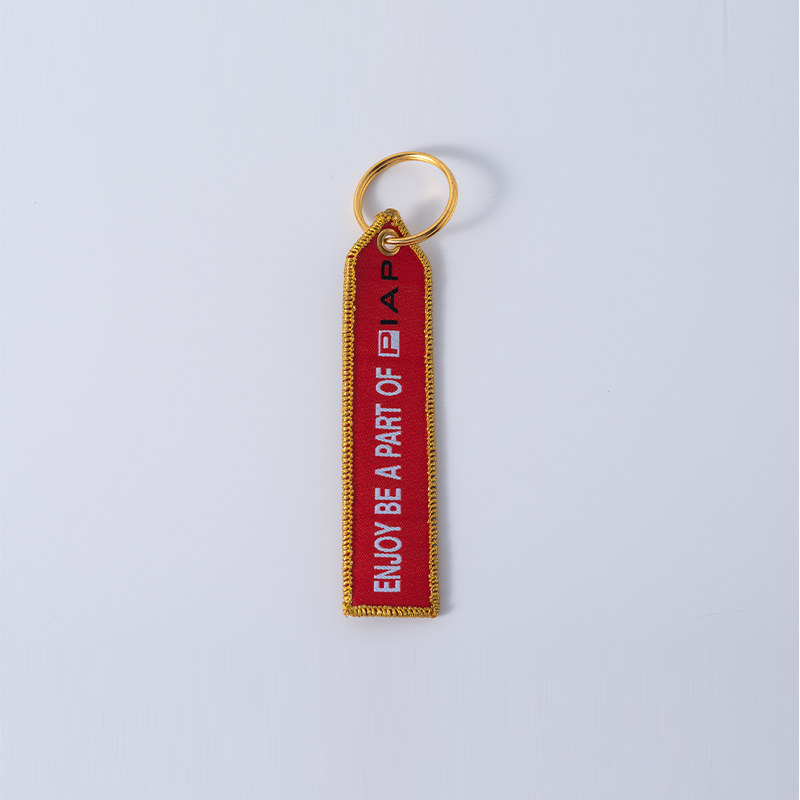
Fabric options cater to a different fan preference. Many supporters prefer woven club keychains. We frame these as a lightweight, highly flexible alternative. Fans often request woven items specifically because fabric does not scratch motorcycle paint or car dashboard panels while driving.
Feature | PVC Option | Woven Option |
|---|---|---|
Visual Style | Vibrant, thick, 3D molded layers. | Flat, high-resolution graphic details. |
Durability | Extremely rugged; easily washable. | Durable but can fray under extreme stress. |
Weight | Heavier, substantial feel. | Very lightweight and pocket-friendly. |
Setup Costs | Requires paying custom metal mold fees. | Lower setup thresholds; cheaper for small runs. |
Cost and scalability differ significantly between the two. PVC requires the manufacturer to CNC-machine a custom metal mold. This mold fee makes small runs economically unviable. PVC only becomes profitable at higher volumes. Conversely, woven options utilize automated looming machinery. This results in much lower setup thresholds, making them ideal for smaller clubs ordering limited quantities.
No item captures the spirit of the game quite like a ceremonial flag. Exchanging football pennants remains a deeply rooted tradition during tournaments, cup finals, and international fixtures. Team captains swap them before kickoff to symbolize respect and sportsmanship. Later, they hang proudly in clubhouses worldwide, serving as historical records of past glories.
A premium ceremonial flag must look and feel substantial. When evaluating suppliers, check for specific quality indicators. Premium versions utilize a stiff felt backing to maintain shape. They feature ornate edge tassels adding traditional flair. The central crest requires high-definition sublimation or meticulous embroidery. Finally, they need sturdy hanging cords capable of supporting the item's weight indefinitely.
We see many clubs make frustrating mistakes when ordering these commemorative items. Warn your procurement team against buying cheap synthetic materials. Flimsy polyester lacks structural integrity. Over time, humidity causes cheap versions to curl dramatically at the edges. Furthermore, poor-quality sublimation inks fade quickly under harsh fluorescent clubhouse lighting. Investing in quality felt and UV-resistant dyes ensures your historical artifacts remain pristine for decades.
Understanding the back-end manufacturing process separates amateur buyers from professional merchandise managers. Successfully transforming a digital logo into a physical product requires strict adherence to technical standards. Ignoring these standards guarantees production errors.
Many clubs mistakenly submit standard web images for production. High-resolution JPEGs or PNGs are entirely insufficient. Manufacturers require vector files (.AI, .EPS, or .PDF). Raster images (like JPEGs) consist of pixels, which blur when enlarged. Vector files use mathematical formulas to plot lines. They scale infinitely without losing quality. Most importantly, manufacturing equipment needs vector paths to accurately digitize embroidery stitches or carve PVC molds.
Never authorize a massive production run blindly. We strongly recommend requesting physical samples first. If timelines are tight, demand high-resolution photo proofs of the first completed unit. This prototyping phase allows you to verify Pantone color accuracy and structural integrity before committing thousands of dollars. You might notice the text is too small to read once stitched. Catching this early saves your entire budget.
Supply chain transparency prevents pre-season panic. Always build transparent assumptions regarding manufacturing timelines into your schedule. Expect standard turnaround times of three to four weeks for custom items. Expediting orders introduces risks of skipped quality checks.
When shortlisting potential vendors, evaluate them using this logic:
Digitizing Fees: Do they offer free artwork digitizing, or will they nickel-and-dime you for file conversions?
Color Guarantee: Do they guarantee strict Pantone matching, or do they only offer "closest available thread" matching?
Hidden Costs: Are mold setups, shipping fees, and revision rounds included in the initial quote?
Sample Policies: Do they readily provide pre-production photos without arguing?
Building a profitable, respected merchandise line requires strategic decision-making. Successful gear relies entirely on matching the specific material to the end-use environment. You need flexible, waterproof TPU for on-pitch player jerseys. Meanwhile, rugged PVC serves best for fan accessories meant to endure daily abuse. By understanding the limits of different applications and insisting on strict vector artwork, you eliminate the most common production disasters.
Take proactive steps today to secure your upcoming season's inventory. First, audit your club's current digital assets to ensure you possess native vector files. Next, reach out to vetted suppliers and request a physical sample pack. Evaluating material textures and stitch quality firsthand remains the best way to secure your investment.
A: Thermoplastic Polyurethane (TPU) leads the industry for activewear. It is entirely waterproof, highly flexible, and resists degradation from sweat. For traditional fabric options, tightly woven patches applied via a secure sew-on method offer exceptional longevity and can survive aggressive on-pitch pulling.
A: Iron-on backing relies on heat-activated adhesives. When sports gear undergoes high-temperature commercial washing and aggressive tumble drying, the extreme heat reactivates and breaks down the glue. Over time, this causes the edges to lift and delaminate from the garment.
A: The industry average MOQ for custom PVC items typically falls between 50 and 100 units. This requirement exists because manufacturers must CNC-machine a custom metal mold for your specific 3D design. Lower quantities simply cannot offset this initial tooling cost.
A: Yes, providing vector art (.AI, .EPS) guarantees precision. Manufacturing machinery requires vector paths to program needle movements or cut molds. While some vendors offer redraw services to convert your JPEGs, supplying native vectors yourself eliminates the risk of accidental design alterations.