
English

Views: 0 Author: Site Editor Publish Time: 2026-08-21 Origin: Site


Sourcing custom patches for work uniforms goes far beyond selecting a visually appealing logo design. The specific application method you choose directly dictates your uniform lifespan. It impacts ongoing replacement expenses and your overall brand perception in the field. When businesses overlook this crucial detail, they face a cascade of unintended problems. Selecting the wrong backing can cause peeling logos after just a few washes. It can lead to permanently damaged garments during the application process. It might even introduce security vulnerabilities if branded apparel is not managed securely. We understand the intense pressure of uniform procurement. You want to get it right the first time. This article provides a clear, evidence-based evaluation of different application backings. You will learn the mechanical differences between various application methods. You will discover practical strategies for matching them to your operational needs. By the end, you will have the absolute confidence to finalize your procurement decision effectively.
Sew-on patches offer the highest durability for industrial environments and heavy-duty laundering but require higher initial labor costs for application.
Iron-on patches provide rapid, cost-effective deployment for light-duty roles but carry a risk of adhesive degradation in high-heat commercial washes.
Velcro patches are the optimal choice for high-turnover roles, modular uniforms, and security compliance, allowing easy removal before off-duty hours.
The ideal backing depends heavily on your specific uniform fabric, staff turnover rate, and daily laundering requirements.
Procurement teams often fixate purely on the unit price of the emblems. However, application labor and replacement frequency usually exceed those initial material expenses significantly. If emblems peel off prematurely, you must pay to replace them. You also lose valuable labor hours during the reapplication process. Evaluating these hidden operational realities ensures you allocate your budget wisely. You must consider the entire lifecycle of the company garments.
Garment lifespan and fabric compatibility represent another major factor in this crucial decision. Applying extreme heat to synthetic uniform blends can melt or warp the fibers. The damage becomes irreversible. Conversely, permanent stitching alters the physical structure of the fabric. Choosing a severe mismatch can ruin expensive winter jackets or specialized safety wear.
Finally, security and compliance require strict attention from management. Branded company gear falling into the wrong hands poses a massive liability. People impersonating utility workers or security personnel create real danger for the public.
Unauthorized Access: Intruders wearing official logos can bypass security checkpoints easily.
Brand Reputation: Former employees misbehaving in branded apparel damage your company image.
Regulatory Fines: Some industries penalize companies for failing to control branded assets securely.
Modular attachment systems help mitigate this severe risk entirely. Employees can easily remove identifying markers when off duty.
High-quality sew-on patches utilize a simple blank or paper backing. Manufacturers design them specifically so you can stitch them permanently into the garment. The needle passes directly through the emblem border and into the underlying textile.
This traditional method offers distinct primary business advantages.
Maximum Durability: The threaded application remains completely impervious to high-heat commercial laundering. It easily resists harsh industrial solvents.
Reliable Adhesion: You face zero risk of edge-curling or chemical adhesive failure over time.
Natural Contour: The threaded connection offers excellent flexibility. It contours naturally alongside the garment movement. This prevents a stiff, board-like feel across an employee's chest.
However, procurement teams must consider notable implementation risks. This method requires specialized commercial sewing equipment. Alternatively, you must hire dedicated tailoring services. This requirement dramatically increases your rollout time. It elevates your per-unit application cost substantially. Additionally, stitching leaves permanent needle holes in the fabric structure. If a uniform needs repurposing for a new employee, removing the old logo will likely show visible damage.
These highly durable solutions are best for mechanics, construction crews, and culinary staff. Any heavy-labor workforce requiring aggressive daily washing will benefit immensely from this permanent bonding technique.
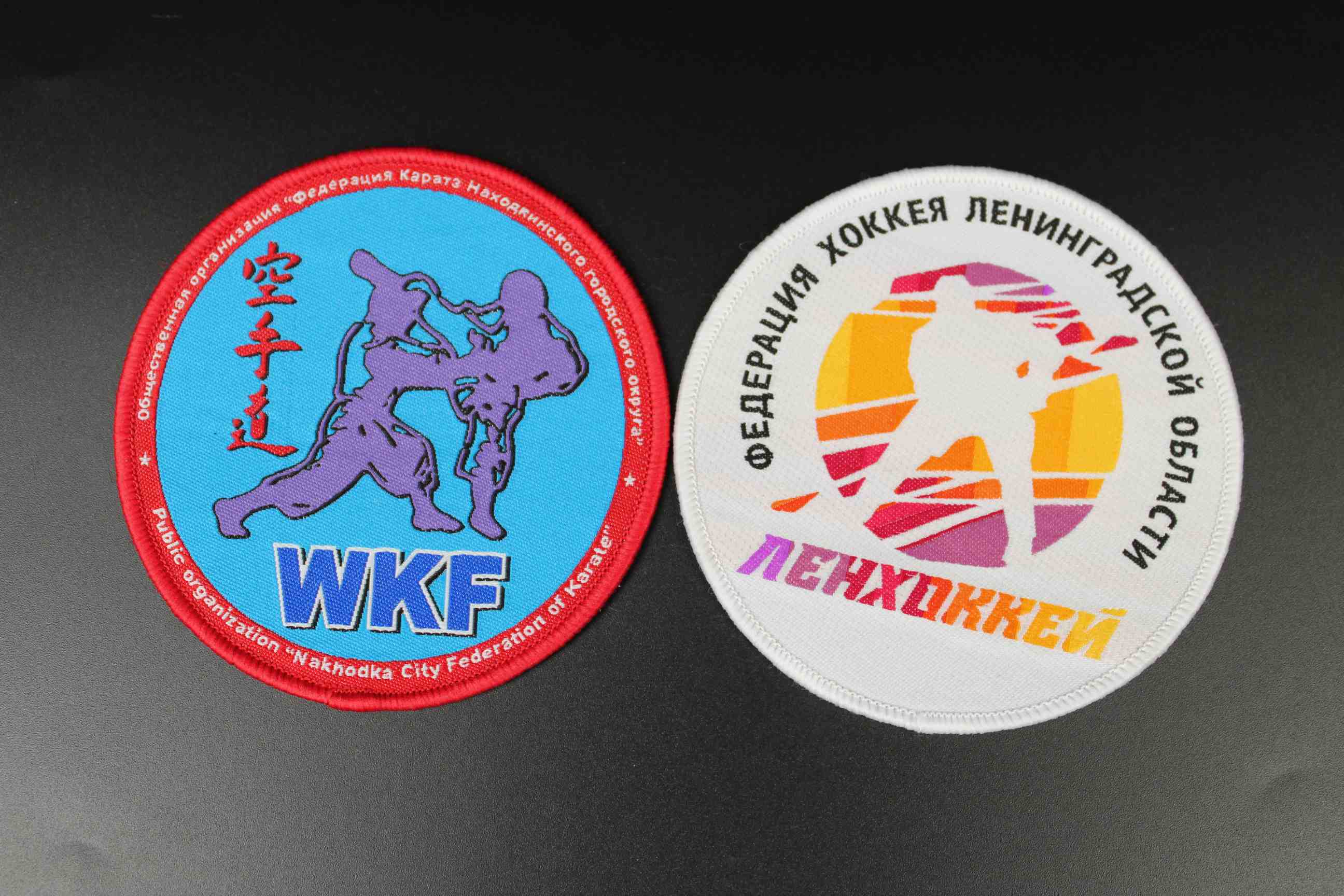
For fast applications, iron-on patches utilize a heat-activated adhesive backing. This specialized glue layer bonds securely to fabric fibers. You trigger the chemical bond using an industrial heat press or a standard commercial iron.
The primary business advantages center entirely around speed and efficiency.
Reduced Labor: This approach drastically reduces application time compared to manual tailoring.
Cost Efficiency: It completely eliminates expensive tailoring costs. You can process hundreds of garments internally.
Aesthetic Finish: It provides a remarkably clean, flush appearance. You will see no visible exterior stitching around the borders.
Despite the undeniable convenience, you must evaluate the long-term implementation risks. The adhesive backing reliably degrades after 25 to 30 cycles in high-heat commercial washes. Chemical-heavy detergents accelerate this breakdown. Furthermore, it is not compatible across all textiles. Applying a heat press to heat-sensitive uniform fabrics creates high scorch risks. You should avoid this method for certain nylons, waterproof treated jackets, and high-stretch performance wear.
This fast deployment method is best for retail staff, event volunteers, and corporate promotional wear. It excels in controlled environments relying primarily on gentle, domestic-style laundering.
For maximum operational flexibility, Velcro patches utilize a classic two-part hook-and-loop system. The soft "loop" section is permanently sewn directly to the uniform jacket. The stiff "hook" section is securely attached to the back of the emblem itself.
The primary business advantages are substantial for modern, dynamic workforces.
Scalability: You can easily reassign a single expensive uniform jacket to multiple employees. You simply swap out their individual name or department emblem.
Compliance and Safety: Staff can rapidly remove company identifiers while commuting. This is a strict standard requirement in security, medical, and tactical fields.
Laundering Efficiency: Workers can detach complex embroidery or specialized materials prior to aggressive washing. This preserves the emblem perfectly over years of use.
There are a few implementation risks to consider before finalizing your order. You will face a slightly higher initial unit cost. This happens due to the manufacturing complexity of the two-part backing requirement. Furthermore, the soft loop base still requires initial sewing onto the garment. This demands some upfront tailoring labor before deployment.
These modular systems are best for security personnel, medical first responders, and tactical teams. They also offer incredible budget value for managing high-turnover seasonal staff.
You must carefully match your backing choice to the actual texture of the emblem. The base material often dictates the most appropriate application method to ensure maximum longevity. Choosing incorrectly can destroy the aesthetic value of the design immediately.
Woven and embroidered options represent the most traditional textures. These classic styles pair universally well across the board. You can confidently mount them using threaded, heat-pressed, or hook-and-loop methods. Their dense thread structures withstand heavy pressure and high temperatures without compromising their physical integrity.
However, premium aesthetic alternatives require a much more cautious approach. Beautiful flock patches feature a distinctive, raised-velvet texture. Companies often use these for retro apparel or high-end corporate branding initiatives. They demand highly specific heat-press calibration if you choose a heat-activated backing. Pressing them incorrectly with excessive pressure will crush the delicate 3D fibers permanently. The design will look flat and ruined. Consequently, industry experts frequently recommend a traditional threaded application. Sewing preserves their luxurious, tactile finish perfectly.
Selecting the perfect strategy requires a methodical review of your daily operations. You can optimize your uniform budget by following a straightforward evaluation process. Our recommended framework ensures you cover all operational variables thoroughly.
First, you must strictly assess your staff turnover rate. Frequent uniform reassignment drains procurement budgets quickly. If your department experiences greater than 30% annual turnover, you should mandate modular hook-and-loop systems. This decision will save massive amounts of money on complete garment replacements over five years.
Next, thoroughly audit your daily laundering practices. Do your uniforms face intense industrial washing facilities? Brands like Cintas or Aramark use boiling water and harsh chemicals. If so, immediately disqualify standard heat-activated adhesives. You must mandate threaded applications. They are the only option guaranteed to survive the aggressive cleaning process.
Finally, carefully calculate your rollout labor capacity. For one-off corporate events, you might have strict budget constraints. For semi-permanent promotional gear, heat-activated adhesives offer the lowest barrier to entry. Your internal team can apply them rapidly without hiring outside tailors.
Application Strategy Comparison
Backing Type | Ideal Turn-over Rate | Laundering Tolerance | Initial Labor Effort | Fabric Damage on Removal |
|---|---|---|---|---|
Threaded / Sew-On | Low | Extremely High (Industrial) | High (Tailoring required) | Medium (Needle holes) |
Heat-Press / Iron-On | Low to Medium | Low (Domestic only) | Low (Heat press) | High (Adhesive residue) |
Hook and Loop / Velcro | High | High (Patch is removed) | Medium (Base requires sewing) | Medium (Base remains on garment) |
As a critical next-step action, always request physical samples of the backing types from your vendor. Test-apply them on your specific uniform fabric. Wash them several times. Observe the results closely before placing a massive bulk order.
There is no single universal best backing for every organization. You will only find the most strategic fit for your specific operational realities. Procurement teams must weigh their unique variables carefully.
Always prioritize long-term durability over upfront convenience to prevent costly uniform attrition.
Respect fabric constraints strictly to avoid scorching or damaging expensive company outerwear.
Implement modular attachment systems if physical security and brand control are paramount to your operations.
A hasty decision often results in peeling logos or ruined jackets. We highly recommend partnering closely with a custom emblem specialist. They can review your specific uniform fabric specifications thoroughly. Promptly reach out to your vendor today. Discuss your operational challenges openly, and request a comprehensive quote for your chosen backing type.
A: Yes, you can easily sew them down for extra security. This creates a highly durable hybrid approach. Many businesses apply the emblem quickly with a heat press to hold it in place. Then, they add a perimeter stitch to guarantee it never peels during heavy washing.
A: Yes, industrial-grade hook-and-loop systems are highly shear-resistant. They securely lock the emblem into place. You will not experience accidental detachment during normal physical movement, bending, or heavy lifting. This makes them perfectly suitable for highly active work environments.
A: Yes, removing a heat-pressed emblem leaves a permanent, sticky adhesive residue behind. The fabric fibers become bound with the glue permanently. Because of this visible damage, you cannot easily unbrand the garments and reuse them for different employees.
A: A heat-activated adhesive method typically takes a few hours using an industrial heat press. A threaded application requires several days of commercial tailoring. A hook-and-loop system offers instant application once the initial loop base is sewn onto the uniforms.