
English

Views: 0 Author: Site Editor Publish Time: 2026-08-28 Origin: Site


The pre-match pennant exchange stands as one of football’s most enduring traditions. It captures a genuine moment of mutual respect before the first whistle blows. Beyond the ceremonial handshake, these items serve a much greater purpose. They act as long-term representations of a club’s unique identity. You will often find them sitting proudly in rival clubhouses for decades. Clubs also rely on them as high-margin fan merchandise in retail shops. However, many teams struggle to balance premium quality against strict budgets. This guide provides a detailed, procurement-focused breakdown for modern buyers. We explain how you can evaluate specific design limitations and select appropriate materials. You will learn exactly how to spec custom pennants for football clubs correctly. We aim to ensure maximum longevity, accurate brand representation, and reliable cost-efficiency. Our breakdown helps you secure the best products while avoiding common manufacturing pitfalls.
Material matters: Polyester offers the best balance of cost and durability, while satin or embroidered finishes serve premium, one-off cup finals.
Production dictates design: Sublimation printing allows for infinite colors and complex crests; embroidery requires simplified, vector-based artwork.
Structural integrity is critical: High-quality double-sided pennants require a stiff inner core to prevent edge-curling over time or during photographs.
Vendor evaluation: Always require Pantone color matching and physical or high-res photo samples before approving large production runs.
Before you begin selecting fabrics or requesting quotes, you must define the product's end use. A club's purchasing requirements change drastically based on context. Framing your business problem early determines your success criteria. Structure always follows function in sports merchandising. We evaluate three primary scenarios below.
The captain’s exchange demands perfection. Millions of fans might see these photographs. Media outlets publish them globally. Therefore, the pennant requires a rigid structure. A shield or triangular shape works best. It must present flawlessly in captain photographs. If the fabric droops, the club crest becomes unreadable.
You typically need larger dimensions for this application. An A4 size offers ideal visibility. The design must feature high-contrast crests. It should also include clear match details. We recommend bold typography for dates and opponent names. This ensures everything remains legible from a distance.
Grassroots festivals operate differently. Hosts give commemorative items to multiple visiting teams. This requires strict cost-per-unit control. You cannot afford premium embroidery for fifty different youth squads. Budget constraints dictate the entire procurement process.
This category benefits from standardized templates. You create an easily repeatable design. Only the date or event name changes each year. This standardization drives down manufacturing costs. It also reduces artwork approval times. You keep margins healthy while still providing a memorable souvenir.
Fan shops focus heavily on margin and scalability. Retail buyers want a product they can sell quickly. These items often feature smaller sizes. Car window variations remain incredibly popular. They usually include small suction cups for easy mounting.
Lightweight bannerettes also perform well in retail environments. Fans hang them in bedrooms or home offices. You must balance visual appeal against production costs. High volume demands efficient manufacturing. We advise clubs to test small batches first. You can scale up once you identify the best-selling designs.
Choosing the right fabric defines your product's lifespan. Every material brings specific realities to the table. You must weigh durability against visual aesthetics. We categorize the main solutions to help you decide.
Most clubs choose polyester pennants for daily operations. This fabric offers high tensile strength. It handles frequent packing and unpacking easily. Furthermore, it boasts excellent ink retention. Colors remain incredibly vibrant after printing.
Polyester is highly resistant to fading. This makes it ideal for clubhouses exposed to harsh sunlight. You want your crest to look perfect ten years from now. Polyester guarantees this longevity. Finally, it remains the most cost-effective option. You can scale up your inventory without breaking the budget.
Sometimes an event demands luxury. Satin and faux-silk offer a glossy, high-end finish. This material catches stadium lighting beautifully. It elevates the perceived value of the exchange. Visiting dignitaries appreciate the premium feel.
However, satin requires careful handling. It is highly prone to minor snags. Rough hands or sharp fingernails can pull the delicate threads. Therefore, we suggest reserving satin for commemorative matches. Keep it for cup finals or centenary celebrations. It serves best as a one-off premium option.
Details dictate the overall quality. You must evaluate the finishing touches rigorously. Check the density of the fringe stitching first. Many cheap manufacturers use glued fringes. Glued fringes degrade rapidly. The adhesive dries out, and the fringe falls away. You must demand sewn fringes for professional longevity.
Cord thickness also matters greatly. The hanging cord must support the item's total weight. Thin cords stretch over time. This causes the fabric to warp while hanging. Ask your vendor to specify the cord diameter. Ensure it matches the structural weight of your chosen fabric.
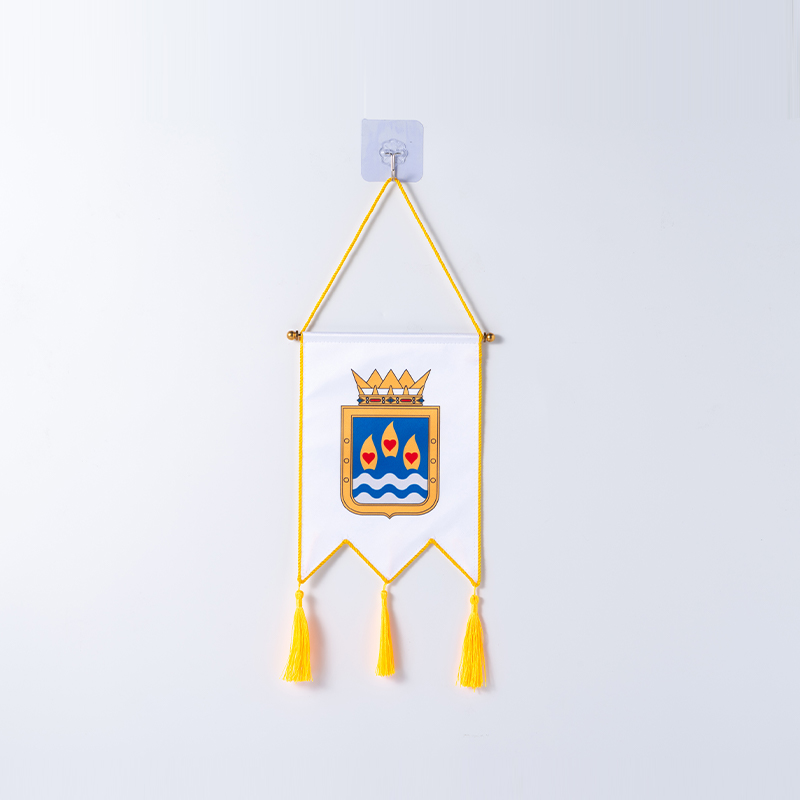
Your chosen production method aligns specific features to your desired outcomes. You cannot separate the design from the manufacturing process. We outline the key evaluation dimensions below.
Dye sublimation represents the modern standard for printed football pennants. This method produces phenomenal outcomes. It works best for complex, photorealistic club crests. You can include intricate gradients effortlessly. Complex sponsor logos present no challenge here.
During implementation, heat infuses the ink directly into the fabric. The design does not sit on top of the material. This means you experience no peeling or cracking. You face zero limitations on your color count. You can print a full-color photograph if desired. The fabric remains soft and flexible after processing.
Embroidery delivers a deeply tactile, heritage aesthetic. The raised threads catch the light beautifully. This outcome feels undeniably expensive. We consider it ideal for historic clubs. Milestone anniversaries also justify this classic approach.
However, you face strict implementation constraints. You will encounter higher upfront digitization fees. Software must convert your logo into precise thread paths. Furthermore, embroidered pennants cannot replicate micro-text. Intricate gradients fail entirely in embroidery. Highly complex sponsor logos turn into a messy blur. You must simplify your artwork aggressively before choosing this route.
Media visibility drives the requirement for dual-sided designs. Captains hold these items up during television broadcasts. You must avoid a blank back appearing in media photos. A plain white reverse side looks unfinished. It wastes valuable branding space.
The execution of double-sided pennants demands technical precision. It requires a block-out middle layer. Often, manufacturers use a stiff interfacing core. This prevents dark ink on the front from bleeding through to the back. More importantly, this core ensures the fabric maintains a stiff, flat drape. It will not curl under the heat of stadium lights.
Production Method Comparison Chart
Production Method | Best Application | Design Limitations | Cost Profile |
|---|---|---|---|
Dye Sublimation | Retail, Grassroots, Complex Crests | None (Handles gradients & photos) | Low to Medium |
Embroidery | Cup Finals, Centenaries, VIP Gifts | No micro-text, no gradients | High (Setup fees apply) |
Double-Sided Stiffened | Pre-Match Captain Exchange | Requires heavier base materials | Medium to High |
Great ideas often fail during execution. You must manage risk through transparent assumptions. Understanding rollout realities prevents launch delays. We detail the critical implementation steps below.
Bad files produce bad products. You must submit files in true vector format. Use .AI, .EPS, or .SVG extensions. Vector files allow for crisp scaling. They never pixelate, regardless of the final product size. Raster images usually cause blurry borders.
Color compliance protects your brand identity. You must require vendors to utilize Pantone Matching System (PMS) codes. Heat presses can alter ink properties. A deep navy might shift and print as a royal blue. Providing specific PMS codes prevents these club colors from shifting. It gives you grounds to reject an inaccurate batch.
You must understand the unit economics before signing a purchase order. Different methods dictate different minimums. Printed polyester allows for incredibly low MOQs. You can sometimes order as few as 10 to 20 units. This flexibility helps small clubs manage cash flow.
Conversely, premium methods require higher volumes. Custom-dyed fringes demand large fabric runs. Embroidered batches require extensive machine setup time. Vendors usually require 50 to 100 units to offset these setup costs. Always ask your supplier to clearly define volume breaks.
Patience ensures accurate delivery. Standard turnaround spans two to four weeks. Factories need time to print, cut, and sew the fabrics. Add one to two weeks for international shipping if utilizing overseas manufacturers. Customs clearance can occasionally add unexpected delays.
We rely on one unbreakable rule of thumb. Never approve a bulk run without seeing a digital mockup. This proof must show the exact placement of the hanging cord. It must also display the exact fringe boundary. Check where the text sits relative to the seams. Approve nothing until the mockup looks perfect.
Selecting a partner requires diligent purchasing criteria. You cannot rely on marketing brochures alone. Action items protect your budget. Follow these steps when evaluating potential suppliers.
Ask for structural guarantees: Challenge the vendor directly. Will they guarantee the item won't curl at the edges after a month? Look for technical terms in their response. They should mention "interfacing" or "stiffener". If they dodge the question, find another supplier.
Request sample packs: Never buy blind. Demand physical examples before committing the club’s budget. Evaluate the weight of the fabric in your hands. Check the vibrancy of the sublimation. Pull gently on the fringes to test the stitching strength.
Assess customization flexibility: Match-day variables change constantly. Can the vendor easily swap out text for individual matches within a larger order? You might need it to say "Vs. Opponent, Date" uniquely each time. Flexible suppliers handle variable data printing seamlessly.
Selecting the right custom pennants for football clubs comes down to aligning the product’s intended use with the correct manufacturing method. For high-volume grassroots tournaments and retail, sublimated polyester provides unbeatable ROI. For historic cup ties, double-sided, heavily fringed, or embroidered options offer the necessary prestige.
Audit your club's upcoming fixtures and merchandising needs today. Gather your vector logo files from your design team. Request a structured quote based on the specific material constraints outlined above. Taking these practical steps ensures your club looks professional both on the pitch and inside the trophy cabinet.
A: Standard match-day pennants typically range from 8x12 inches (20x30 cm) to 10x14 inches (25x35 cm). These dimensions look proportionate in team photographs. Smaller versions are frequently used for youth tournaments and retail fan shops to reduce overall costs.
A: Yes. A common layout features the home club’s primary crest on the front, and specific match details (date, opponent, venue) or a sponsor collage on the back. You need a block-out core material to prevent the two designs from bleeding together.
A: This is almost always an artwork issue, not a printing error. Supplying low-resolution raster images (JPEG/PNG) instead of scalable vector files (.AI/.EPS) results in pixelation during the sublimation transfer process. Always submit vector graphics to your vendor.