
English

Views: 0 Author: Site Editor Publish Time: 2026-10-26 Origin: Site


Embroidered patches are made as separate components and then attached to a garment. Direct embroidery forms the design on the garment itself. Choose between them by considering the finished appearance, fabric behavior, production access and whether the identification may need to change. A patch can separate emblem production from garment decoration and provide a defined background. Direct embroidery can integrate the logo into a suitable garment without a separate patch perimeter. Neither approach is automatically cheaper, more durable or better for every fabric. The practical decision comes from comparing the complete installed result on the actual item you intend to decorate.
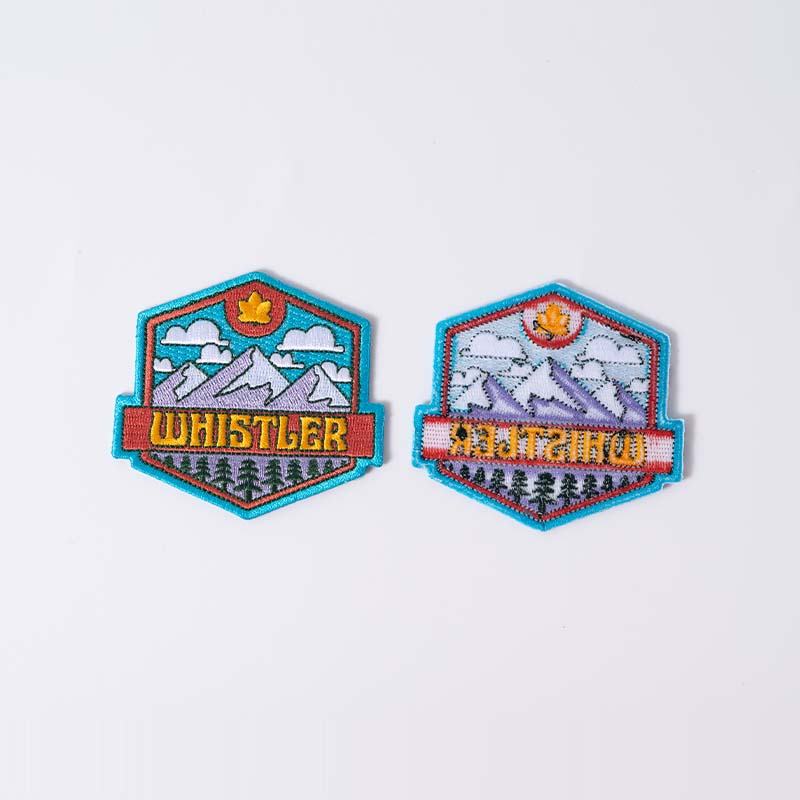
The central difference is where the embroidery is produced. Embroidered patches carry their artwork on a separate base; direct embroidery uses the garment as the receiving surface. That difference changes both the appearance and the workflow.
A patch has its own outline, background, edge and reverse construction. Those elements become visible or tangible parts of the design. A defined emblem can suit a club crest, commemorative graphic or uniform identification, especially when the mark should appear as a distinct badge.
Direct embroidery places the stitched logo directly against the garment's fabric and color. It can suit a wordmark or symbol intended to appear integrated into a shirt, jacket or cap. There is no separate patch outline unless an outline is included in the embroidery artwork itself.
Both methods require production artwork suitable for embroidery. A complex digital illustration does not become easier simply because it moves onto embroidered patches. Small text, narrow gaps and fine lines still need review. The patch base may offer a more controlled surface than some garments, but the intended design must remain physically stitchable.
Begin with the desired visual hierarchy. If a framed emblem is part of the identity, a patch naturally supplies that component. If the garment should remain visible around a restrained logo, direct embroidery may suit the concept. Then assess whether the material and production process support that appearance.
Compare embroidered patches and direct embroidery at the same artwork size and garment position. Include borders, backing and installation in the patch option, and include stabilizing, access and garment handling in the direct option.
Project condition | Embroidered patches | Direct embroidery |
|---|---|---|
Desired appearance | A distinct emblem with a defined perimeter and background | A design integrated into the garment surface |
Receiving surface | Artwork is stitched on the separate patch base | Garment fabric receives the decorative stitching |
Installation work | Requires sewing, compatible bonding or a fastening arrangement | Requires embroidery access, positioning and suitable support |
Future changes | Some attachment systems allow replacement, with conditions | Removing and replacing stitches can leave fabric marks |
Mixed garment inventory | One emblem construction may be used if each attachment is validated | Different fabrics may need different embroidery setups |
Approval sample | Complete patch attached to the target item | Complete design embroidered on the target item |
These are workflow differences rather than absolute performance rankings. A badly attached patch can fail despite well-made embroidery. Direct embroidery can perform well on a suitable fabric when the design and support are appropriate. The finished assembly is the relevant comparison.
For a separate emblem with a visible stitched texture, textured embroidered emblem patches provide a relevant product format. Approve the patch's footprint and edge as part of the garment design rather than treating them as incidental details.
The receiving fabric and decoration location can determine which method is practical. Embroidered patches reduce the need to stitch the whole decorative design into the garment, but their attachment still needs validation. Direct embroidery requires the garment to tolerate and support the stitched design.
Direct embroidery can distort a fabric if the design, support and handling are unsuitable. The stabilizer should be selected for the fabric and design, rather than copied from an unrelated garment. Review puckering, stretch behavior and the reverse-side feel on a representative sample.
A patch introduces a separate layer and can also affect drape. Its size, stiffness and attachment may create a firm island on a soft panel. Embroidered patches are therefore not an automatic solution for every light or stretchy fabric. Compare the actual finished alternatives in position.
Needle penetration and heat application raise different compatibility questions. Sewing a patch still makes needle holes; a patch does not remove that issue simply because its decorative stitches were made separately. Direct embroidery also penetrates the fabric throughout the design.
A heat-applied patch avoids sewing only when the adhesive system is suitable and the garment can tolerate the required conditions. For iron-on embroidered patches, confirm the specific adhesive instructions and test the actual textile. Do not infer compatibility from the patch face material alone.
Direct embroidery needs access to the intended layer without accidentally stitching through a pocket or lining that should remain free. A finished garment may restrict hooping or machine access. Review the decoration stage before garment assembly is locked.
Embroidered patches also require installation access. Sewing around the perimeter may be simpler than stitching the full logo in some locations, but it can still catch an unwanted layer. Mark the exact stitch path and confirm how the item will be held during attachment.
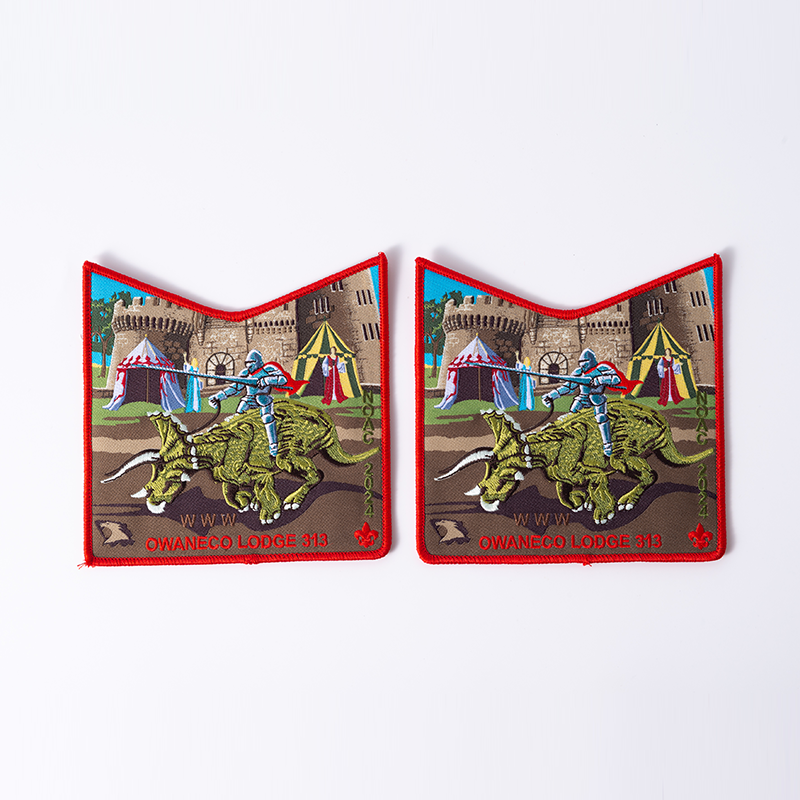
Choose embroidered patches when a separate emblem, defined background or planned replacement system serves the project. Choose direct embroidery when an integrated logo suits the garment and the fabric, access and production setup support it. Compare the complete installed alternatives before deciding on price or performance. Dongguan Pengyuan Garment Accessories Co., Ltd. is a manufacturer of woven and embroidered garment accessories. For embroidered patches, specify the face, perimeter and attachment as one component, then approve it on the target item. For direct embroidery, give equal attention to fabric support, placement and garment handling.
No. A large design can favor separate patch production in some orders, but finishing, backing and installation add cost. Compare complete quotations at the same visible artwork size and quantity.
It may, if the patch is sufficiently sized and the old embroidery does not prevent an acceptable surface or attachment. Inspect a sample because raised stitches can affect the appearance and hand of the cover.
Not necessarily. Fabric texture, color, stretch and support can change the result. Approve representative garments rather than assuming one stitch file produces an identical appearance everywhere.
Possibly, but removal may damage the patch or leave marks on the original garment. Reattachment also needs a suitable edge and receiving fabric. Treat transferability as a condition to evaluate, not a guarantee.
Yes. A project can use separate patches for some items and direct embroidery for others. Approve the logo proportions, colors and finished samples for each construction so the collection remains visually coherent.