
English

Views: 0 Author: Site Editor Publish Time: 2026-10-24 Origin: Site


“High density” sounds like a clear specification until two quotations use it to describe different constructions. For woven emblems, thread density describes how closely yarns are arranged in the woven fabric. It can refer to warp ends, weft picks or a supplier's own construction category. A larger number does not automatically deliver sharper lettering, a softer hand or a longer service life. The number becomes useful when it is connected to its direction, unit, yarn size, weave and finished result. Buyers should therefore compare a complete construction and an approved sample, rather than select woven emblems by one isolated density claim.
Thread density in woven emblems should identify what is being counted and over what distance. Warp density and weft density describe different directions. A commercial phrase such as “high thread count” is incomplete unless the supplier explains its meaning.
Warp yarns run lengthwise through the woven construction. Individual warp yarns are called ends. Weft yarns are inserted across the warp, and an insertion is called a pick. Ends per inch, often abbreviated EPI, and picks per inch, or PPI, express those directional counts. Counts may also be stated per centimeter.
The unit matters. A count per centimeter and a count per inch cannot be compared as if their numerical values used the same scale. Ask the supplier to state one common unit for both quotations. Also clarify whether the figure describes the woven fabric as finished or a production setting before finishing.
“Thread count” can be used loosely in sales descriptions. It might refer to one directional count, a combined count or an internal quality tier. Likewise, “high definition” may describe a commercial product category rather than a standardized density measurement. Do not infer a precise construction from either phrase.
For woven emblems, a useful explanation states the relevant count, yarn specification and weave construction together. If those details are proprietary or unavailable, the purchasing specification can still focus on observable outcomes: readable characters, defined outlines, agreed flexibility and acceptable appearance against a retained physical sample.
Density affects the spacing of yarns, but the yarn dimensions and interlacing pattern determine how that spacing behaves. Woven emblems made with different yarns can have different coverage and appearance even when a quoted count is identical.
Fine yarns occupy less space than coarse yarns. A construction using finer yarns may need more ends and picks to create the intended fabric coverage. A lower count using thicker yarns can therefore look fuller than a higher count using thinner yarns. That does not make the lower-count fabric more detailed; it shows why coverage and detail are separate questions.
Yarn count systems also need identification. A denier or dtex value describes linear density, not the number of yarns per inch. Do not compare a yarn-size number directly with PPI. They answer different questions: how substantial the yarn is and how frequently it appears across a measured distance.
The weave determines where yarns pass over and under one another. That arrangement affects which colors appear at the surface and how the fabric reflects light. On woven emblems, a smooth-looking color field and a sharply defined letter result from the interaction of design conversion, yarns and interlacing.
More closely arranged yarns can provide additional opportunities to represent a feature, but they do not make every feature reproducible. A tiny opening may still disappear if its geometry is unsuitable. A complicated tonal drawing may still need simplification into discrete thread-color areas.
Keep the complete construction in view. Backing, finishing and perimeter treatment can change the hand of woven emblems after weaving. An unbacked sample should not be used to promise the same flexibility from the final backed and bordered product.
For buyers, density matters when it improves the required result without creating an unacceptable tradeoff. Evaluate woven emblems for the actual design and application rather than assuming maximum density is the objective.
Required result | What density may influence | What else must be checked |
|---|---|---|
Small text clarity | The available yarn arrangement for forming details | Font, stroke width, open counters and spacing |
Solid-looking background | How closely yarns cover the woven field | Yarn size, color arrangement and weave |
Comfortable bending | The compactness of the woven construction | Backing, border, finishing and overall dimensions |
Clean color boundaries | The representation of changes between design areas | Artwork conversion, contrast and yarn selection |
Suitable service behavior | One aspect of the fabric construction | Attachment, edge finishing and the intended care process |
Examine the smallest important feature first. A large geometric logo may reproduce clearly without the same construction needed for a compact crest containing several text lines. Paying for a denser option has little value if the artwork does not benefit or the added cost displaces more useful sampling.
Inspect large background fields as well. They can reveal unwanted show-through, inconsistent appearance or a surface texture that conflicts with the intended design. View the sample under ordinary lighting and from more than one angle before deciding that a screen rendering accurately represents the textile.
multicolor woven logo badges are a relevant format for reviewing how lettering, color areas and finished dimensions interact. The artwork should determine which details need particular attention during construction review.
Density does not specify embroidery coverage, image resolution, attachment strength or edge construction. Woven emblems need those subjects described separately wherever they apply. A single “high density” label cannot stand in for the complete product brief.
Embroidery coverage describes the approximate portion of an embroidered face occupied by stitched artwork rather than visible base fabric. It does not measure the warp or weft arrangement of a woven face. A woven center with an embroidered frame combines constructions; the frame does not supply a density value for the center.
For woven patches with borders, specify the woven artwork and the stitched perimeter independently. A border that occupies too much of the outline can reduce usable artwork space even when the center construction remains unchanged.
A high-resolution artwork file can make the intended shapes easier to interpret. It does not create a one-to-one conversion between image pixels and yarn intersections. Woven emblems require a production interpretation of the artwork at the final physical size.
Similarly, a digital proof can be enlarged without revealing the real limits of a textile feature. It is useful for checking layout and wording, while a physical sample is needed to judge the woven surface. Approve both for the questions each can actually answer.
A denser face cannot compensate for an unsuitable attachment or an unfinished vulnerable edge. The fabric, perimeter, backing, garment and care process act as one assembly. Avoid accepting a wash-life or abrasion claim solely because the product has a high-count description.
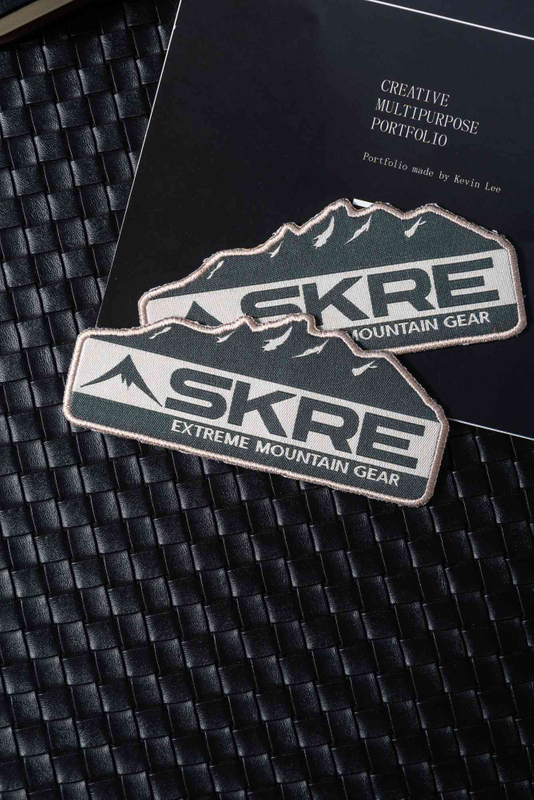
The most useful comparison holds the artwork, dimensions, yarn colors and finishing constant while evaluating the proposed constructions. Without those controls, differences between woven emblems cannot reliably be attributed to density.
Does the density figure describe warp ends, weft picks or a commercial category?
What unit and fabric condition does the figure use?
Are the yarn specification and weave the same in both options?
Which feature in this artwork is expected to improve?
Will the sample include the production backing and perimeter?
What changes require another approval before bulk production?
If a supplier recommends an upgrade, ask for its relevance to your design. “The small lowercase counters need a different construction” is more actionable than “this option is better.” When possible, compare samples of the same artwork rather than unrelated woven emblems selected to flatter each construction.
For woven emblems ordered in several sizes, review the construction at each size rather than applying one approval indiscriminately. The smallest version may need different artwork spacing, while a larger version may expose broad background areas that were inconspicuous in the first sample. Identify each size as a separate approval item when these differences matter.
List the characters that must be readable, the outlines that must remain separated and the background areas that need a consistent appearance. Record the finished dimensions and intended installation. Use ordinary viewing for visual acceptance, with magnification as a diagnostic aid rather than the sole approval method.
Flex the finished sample in the way its garment location requires. If woven emblems will sit on a curved panel, inspect them on that curve. If laundering is expected, review representative attached samples after the agreed care process. Do not substitute a loose, unfinished swatch for the completed component.
Retain the approved physical reference alongside the artwork and construction revision. Written terms such as “soft,” “sharp” and “dense” are open to interpretation; a sample plus specific acceptance conditions makes them more useful. For repeat woven emblems, agree which changes to yarn, weave, backing or finishing trigger renewed review.
This approach also improves cost comparisons. Separate the price of the proposed face construction from changes in border, backing, packaging or quantity. Otherwise a more expensive quotation may be attributed to density when another specification is responsible.
Thread density is useful when its count, direction and unit are clear and its relationship with yarn and weave is understood. For woven emblems, it should support a defined visual and handling requirement rather than act as an isolated quality score. Dongguan Pengyuan Garment Accessories Co., Ltd. is a manufacturer of woven and embroidered garment accessories. When specifying woven emblems, compare equivalent constructions and inspect the completed sample, including its backing and border. Approve readable detail, acceptable surface appearance and the intended garment fit, then retain those references for production and repeat orders.
No. A suitable construction depends on yarn size, weave, artwork, dimensions and the finished application. A PPI value without those details is insufficient to establish suitability.
A combined figure may be used in some descriptions, but it conceals the directional counts. Ask for the separate values and counting convention when comparing constructions.
An ordinary product photograph is not a reliable measurement method. Scale, image processing, yarn visibility and viewing angle can obscure individual ends and picks. Use an agreed measurement method or supplier construction information.
No. Yarn shades, weave arrangement, visible yarn proportions and lighting all affect appearance. Compare physical samples when color consistency is important.
A yarn change can alter appearance, detail and hand even if the nominal density remains unchanged. Reapproval is sensible when those characteristics are controlled requirements.