
English

Views: 0 Author: Site Editor Publish Time: 2026-10-28 Origin: Site


A logo can be woven into a sleeve badge or a neck label, yet those two items create different requirements for garment production. Woven patches are generally developed as separate emblems with a defined outline and an attachment specification. Woven labels are generally developed as identification trims, often with folds or sewing allowances that fit a garment seam. Both can use interlaced yarns to form the design. The useful distinction is therefore the finished construction and installation, rather than the word “woven” alone. Choose by placement, exposed edges, contact with the wearer and the way the trim enters your production process.
Woven patches usually function as visible surface emblems; woven labels usually function as garment identification or branding trims. These are common commercial categories, with overlap between them. A specification drawing is more reliable than the product name when a trim could reasonably belong to either category.
In woven construction, the artwork is formed through the arrangement of yarns. This distinguishes both formats from an embroidered design stitched onto a separate base. A woven label can be sewn flat onto the outside of a jacket and look much like a lightweight patch. Conversely, a patch can carry only a short brand name. Neither location nor artwork alone establishes the construction.
For woven patches, buyers typically define the complete outer shape, perimeter finish and attachment method. The emblem needs to make sense as an independent component before it reaches the garment. A finished border may contribute to the appearance, but a thick stitched border is not compulsory for every patch design.
For a woven label, buyers commonly define the visible panel, fold positions, cut ends and sewing allowance. Part of the supplied trim may disappear into a seam. Its supplied dimensions can consequently differ from the dimensions the consumer sees. Treating those measurements as interchangeable can produce a label that fits the drawing but displays the wrong amount of artwork.
The practical question is simple: does the component need a self-contained perimeter, or does garment construction complete its edges? Answering that question narrows the choice before you compare finishes, quantities or prices.
Compare the same functional dimensions for both options: visible artwork, perimeter, attachment and contact surface. Woven patches and woven labels can share a weaving process while requiring different finishing work.
Decision | Woven patch | Woven label |
|---|---|---|
Primary role | A separately finished emblem on a garment or accessory | Identification or branding trim integrated into the item |
Drawing dimensions | Overall outline plus usable artwork area | Supplied size, visible panel, folds and sewing allowance |
Perimeter | Exposed edges need a specified finish | Some edges may be folded or enclosed in seams |
Attachment | Sewing, compatible adhesive or a specified fastening system | Often sewn into a seam or stitched through designated areas |
Wearer contact | Depends on placement, backing and garment layers | Especially relevant at the neck or other contact points |
Approval sample | Finished emblem attached to the target material | Finished and folded trim installed in the intended seam |
A perimeter takes space. On woven patches with a stitched frame, the central artwork must remain clear of that frame. A logo scaled to the entire outer rectangle can become crowded once the border and sewing line are added. Specify the usable central field as well as the overall width and height.
A folded label has a different space calculation. Its end folds and seam allowance consume material without necessarily appearing on the finished garment. Place the brand mark inside the visible panel and keep essential lettering clear of folds. A flat artwork file without fold marks leaves the factory to interpret where the visible design begins.
For projects needing a woven center and a distinct stitched frame, embroidered-border woven patches illustrate that combination. A stitched frame does not turn the woven center into an embroidered face.
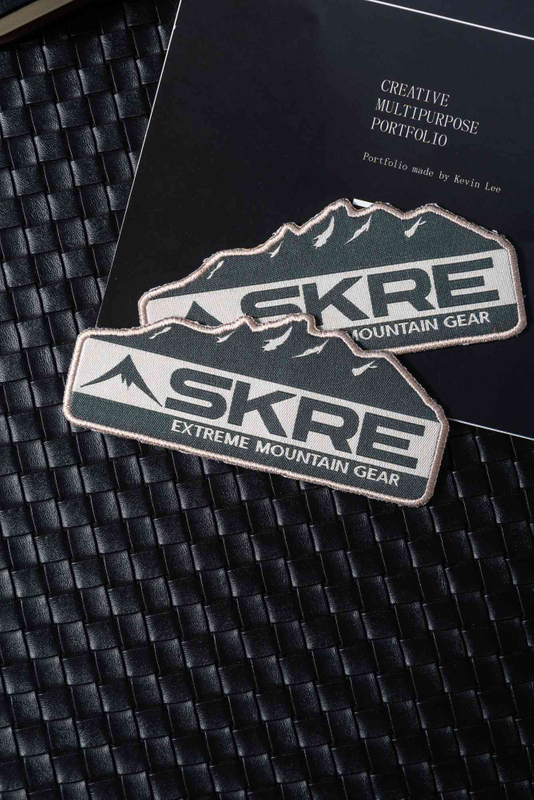
Choose woven patches when the design needs to read as an independent surface emblem. Choose a woven label when a compact identification trim, fold or seam insertion is central to the garment design. In both cases, approve the component in its installed position.
On a jacket sleeve, bag panel or uniform chest, woven patches can provide a clearly bounded design field. That field separates the artwork from changing garment colors and textures. If the same emblem will appear on several products, a consistent patch background can help maintain the intended visual relationship between the lettering and its surroundings.
Exterior placement still needs a garment-specific review. A large, firm emblem can interrupt the drape of a light panel. A raised border may feel different on a cap than on a flat bag. Check the footprint, bending behavior and position instead of assuming that one approved patch works equally well everywhere.
A label may suit a neck seam, side seam or hem tab where the construction already provides a place to secure it. The fold should present the correct artwork side and leave sufficient sewing space. A reversed fold can hide the brand name even when the woven artwork itself is correct.
Softness should be assessed on the finished trim. Yarn, weave, cut edges, folds and any added backing all influence the contact surface. Calling an item a label does not guarantee comfort, and calling it a patch does not automatically make it unsuitable near skin. Handle the actual sample and inspect any edge likely to touch the wearer.
For woven patches positioned away from the body, appearance may dominate the review. For internal labels, edge feel and seam placement may carry more weight. These priorities belong in the brief because a visually attractive sample may still be uncomfortable or awkward to install.
Woven patches describe a face construction, not a universal attachment system. A woven label likewise needs a sewing or installation specification. Confirm the complete assembly rather than assuming the reverse side from the product name.
Sewing secures a trim through the garment and requires a planned stitch path. With woven patches, that path should avoid important artwork and leave enough material between the needle line and the edge. For labels, identify which ends or panels are stitched and which parts remain free. This prevents a sewing operator from choosing a convenient line that crosses the logo.
Heat-applied adhesive introduces another set of conditions: garment heat tolerance, surface finish, application pressure, dwell time and cooling. A polyester patch face does not establish compatibility with every polyester garment. The adhesive and the receiving fabric must be evaluated together using the approved application instructions.
Hook-and-loop attachment adds a detachable interface and requires a matching receiving surface. It also adds thickness. Specify whether the order includes only the hook-backed emblem or both mating components. Woven patches intended for interchangeable identification need this detail resolved before the garment panel is finalized.
Packaging and handling layers should not be confused with permanent attachment. A paper-backed item, for example, should not be treated as iron-on merely because it has a layer on its reverse. Ask what that layer does, whether it remains in the finished assembly and which operation actually secures the trim.
To compare woven patches with woven labels fairly, quote the complete installed specification. A unit price for an unfinished woven trim cannot be compared directly with the price of a bordered, backed and individually finished emblem.
Include the artwork and its intended location on a garment drawing. Mark overall dimensions, visible dimensions, edge treatment and the sewing or bonding area. For labels, add a fold diagram. For woven patches, identify the perimeter finish and reverse-side construction. State the quantity for each artwork version rather than one combined total without a breakdown.
Keep thread colors and background expectations explicit. A digital color reference helps communicate intent, but a woven sample is still needed to judge the appearance of yarn under the lighting relevant to the product. If the same brand uses both formats, compare the physical trims together rather than approving each from unrelated screen photographs.
Review loose woven patches for lettering, shape, border consistency and backing. Then attach a sample to the actual garment fabric and review placement, edge lift, puckering and hand feel. For a woven label, check the visible panel after folding and sewing, including whether the seam pulls the wording off center.
Decide how the garment will be cared for and evaluate representative assembled samples under that care process. The trim, sewing thread, adhesive and garment may respond differently. A loose component that looks acceptable after handling does not establish how the complete assembly will behave after laundering.
Record the approved drawing revision and retain a physical reference when appearance is critical. When woven patches and labels are reordered together, identify them by their complete specification rather than by similar descriptions such as “small woven logo.” This reduces the chance of substituting one construction for the other.
Confirm whether dimensions are supplied, folded, visible or overall.
Mark the artwork clearance, seam allowance and attachment area.
Identify every backing or handling layer and its purpose.
Check the finished edge against the intended contact surface.
Approve the installed sample on the specified garment fabric.
Retain the accepted artwork, construction and color references.
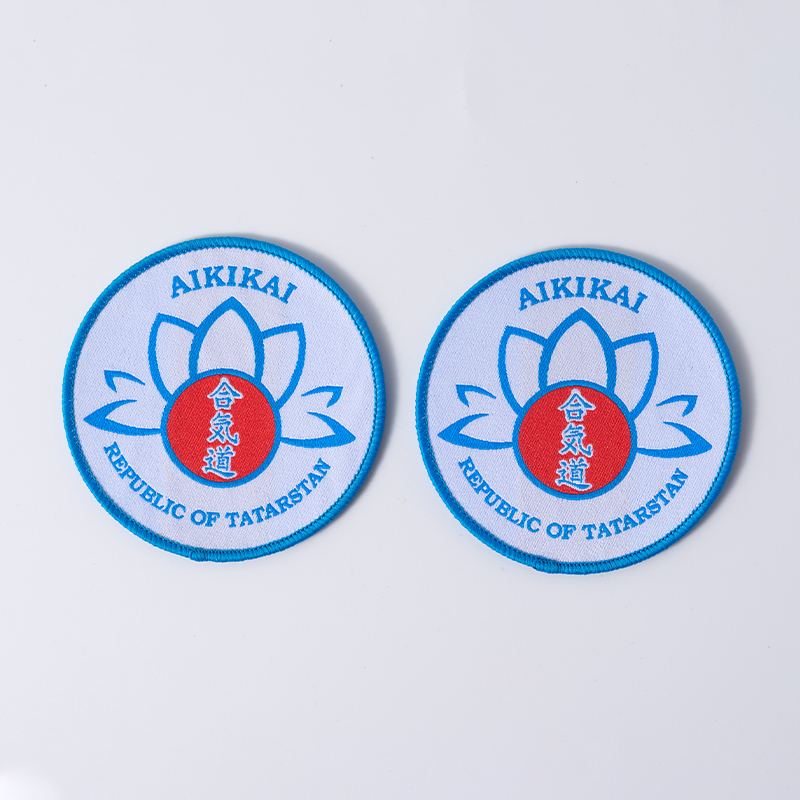
Woven patches and woven labels are best separated by their finished role: an independently finished emblem versus a trim designed around garment identification and construction. The overlap is real, so the drawing, edge treatment and attachment specification should settle the choice. Dongguan Pengyuan Garment Accessories Co., Ltd. is a manufacturer of woven and embroidered garment accessories. For a project using woven patches, define the visible artwork field, perimeter and installed position together. For a label, add the fold and seam geometry. In either format, approve the finished trim on the intended garment before releasing the complete specification.
They can be considered if their dimensions, edge feel, backing and installation suit the neck position. A separately finished patch may add unnecessary thickness, so evaluate a sewn sample against a purpose-designed label before choosing.
No. Thickness depends on the weave, yarns, folds, backing and perimeter construction. Compare the complete finished items rather than relying on their sales names.
Usually the brand elements can be shared, but the layout may need revision. Fold allowances, border clearance and visible dimensions can differ, so prepare a separate production drawing for each trim.
A brand label identifies the brand. Care and other required garment information are separate content requirements that depend on the product and destination market. Do not assume a logo-only trim fulfills those functions.
Only if both sides are intended to be visible. Specify the folded orientation, which face is outward and whether the reverse needs readable artwork; otherwise the two sides may not present as expected.