
English

Views: 0 Author: Site Editor Publish Time: 2026-03-04 Origin: Site


Club identity is often expressed through visual details, and one of the most recognizable elements is the badge. A well-designed flock patch can convey professionalism, heritage, and team spirit while maintaining a premium tactile finish that stands out from printed or embroidered alternatives. However, clubs, brands, and uniform designers frequently face a challenge: how to ensure a flock badge remains sharp, clear, and visually consistent after repeated wear, washing, and friction.
Before discussing design strategies, it is important to understand the characteristics that distinguish flock patches from other badge types. A flock patch features a soft velvet-like surface created by applying short fibers onto an adhesive layer. This creates depth, a premium texture, and a strong visual contrast compared with flat prints.
Because flock surfaces interact with light differently, fine details appear more refined. However, this also means that poor design decisions can become more visible over time, especially when edges blur or fibers wear unevenly.
A successful club flock badge therefore balances aesthetics and durability from the beginning.
The first step in designing a long-lasting club flock badge is clearly defining how the badge will be used in real conditions. A badge created for daily sports uniforms faces very different challenges compared with one designed for promotional apparel or ceremonial wear. Without understanding the usage scenario, even a visually strong design may struggle to maintain its appearance over time.
Uniform badges worn during training or competition typically experience frequent washing, repeated friction, and continuous movement. This places pressure on edges, adhesive layers, and fiber surfaces. Outerwear badges, on the other hand, may face environmental exposure such as sunlight, moisture, and temperature variation. Fashion garments often prioritize visual precision and softness, which requires careful balance between durability and aesthetic detail.
Before finalizing the badge design, it is important to clarify several practical questions. Designers should consider how often the garment will be washed and whether industrial or household washing methods will be used. Fabric type also plays a significant role, as smooth woven fabrics, stretch materials, and technical textiles each interact differently with flock patches. Movement is another key factor. Badges placed on sleeves, chest panels, or equipment-contact areas may experience abrasion, which influences edge design and flock density. Finally, understanding whether the badge serves decorative purposes or acts as a core brand identifier helps determine how much structural reinforcement is necessary.
Clarifying these conditions early allows designers to choose the most suitable flock density, backing method, and edge finishing strategy. This foundation ensures that the badge is engineered for real use rather than relying solely on visual appearance.
A common reason flock badges lose definition over time is excessive design complexity. Very fine lines, small typography, and intricate gradients may appear precise in initial samples but can become less distinct after repeated wear and washing. Flock surfaces emphasize texture, which means overly delicate details are more vulnerable to visual softening.
To maintain clarity, designers should focus on bold shapes and controlled detail. Strong outlines help protect logo visibility, while simplified internal elements reduce the risk of edge distortion. Clear color contrast also improves long-term recognition, especially as garments age.
Practical artwork guidelines include using thicker outlines for logos and lettering, avoiding extremely small text that may blur visually, and limiting micro-textures inside shapes that do not contribute to recognition. Prioritizing strong silhouettes ensures the badge remains identifiable from a distance and under different lighting conditions.
These adjustments do not reduce the visual impact of a club badge. Instead, they strengthen its ability to retain a sharp, consistent appearance throughout repeated use, which is essential for maintaining brand identity over time.
Fiber density plays a critical role in maintaining badge appearance. Higher density flock surfaces create a more uniform texture, which helps the badge resist visual wear.
Low-density flock may appear uneven after washing because fibers separate more easily. Higher density surfaces provide better coverage and maintain color consistency.
When designing club badges expected to endure frequent wear, specifying appropriate flock density is essential.
Edges are often the first area where wear becomes visible. Poor edge structure can cause lifting, fraying, or loss of shape.
Use defined border lines
Consider layered badge construction
Avoid ultra-thin edge shapes
Choose die-cut precision suitable for the design
A well-designed edge stabilizes the badge structure and keeps the logo outline sharp.
The backing method influences both durability and application performance. Club flock badges commonly use heat seal, sew-on, or combined backing solutions.
Backing Type | Durability | Best Use Scenario |
Heat Seal | Good | Sports uniforms and fashion apparel |
Sew-On | Very high | Heavy use garments |
Heat Seal + Stitch | Maximum | Professional club uniforms |
For repeated wear, combined methods often provide the best long-term stability.
Color choice affects how well a flock patch maintains visual sharpness. High-contrast combinations remain readable even if minor surface changes occur. Mid-tone colors may show wear earlier because texture variations become more noticeable.
Designers should also consider dye stability and fiber consistency when selecting colors for club badges.
Using fewer colors with strong contrast often improves longevity.
A flock patch does not exist independently; it interacts with the garment fabric. Stretch fabrics, textured materials, and technical fabrics can influence badge durability.
Smooth woven fabrics typically support flock patches more effectively. Stretch garments may require flexible adhesive formulations and adjusted badge structure.
Understanding fabric compatibility helps prevent distortion after repeated wear.
Even the best design requires precise manufacturing. Consistent fiber application, accurate die cutting, and controlled adhesive distribution all affect how a flock badge performs over time.
At Dongguan Pengyuan Garment Accessories Co., Ltd., we emphasize production consistency to ensure each badge maintains uniform texture and edge clarity. Quality control during sampling and bulk production helps prevent variation that could impact long-term appearance.
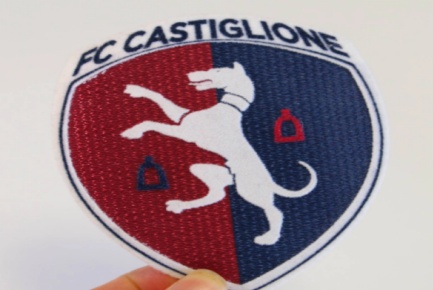
Clubs often underestimate the importance of testing. Performing wash tests, abrasion tests, and application trials helps validate design decisions before mass production.
Testing allows designers to evaluate:
Edge stability
Fiber retention
Color consistency
Adhesion performance
Adjustments at this stage prevent long-term issues.
Several practical strategies consistently improve flock badge durability:
Increase key shape thickness
Use layered badge construction
Avoid micro-details
Reinforce borders
Match backing to garment use
Specify appropriate flock density
These design choices ensure badges remain visually sharp even after extensive wear.
Design Factor | Impact on Longevity | Recommended Approach |
Artwork detail | High | Simplify fine elements |
Flock density | High | Use medium-to-high density |
Edge structure | Very high | Reinforce borders |
Backing type | High | Match use scenario |
Fabric compatibility | Medium | Test before production |
Color contrast | Medium | Prefer strong contrast |
This structured approach helps clubs make informed design decisions.
Designing a durable flock patch is a collaborative process. Clubs provide visual identity and usage context, while manufacturers translate these requirements into material and production solutions.
Early communication allows optimization of artwork, structure, and backing before sampling. This reduces revisions and ensures consistent results.
At Dongguan Pengyuan Garment Accessories Co., Ltd., we support clients through design consultation, sampling, and production refinement to achieve long-lasting club badges.
A badge that maintains its clarity strengthens brand perception. Consistent appearance across uniforms enhances professionalism and identity recognition. Durable flock patches also reduce replacement frequency, improving cost efficiency over time.
Investing in thoughtful design therefore benefits both visual impact and operational practicality.
Designing a club flock badge that stays sharp after repeated wear requires more than attractive artwork. It involves careful decisions about detail level, fiber density, edge structure, backing method, color planning, and fabric compatibility. When these elements are aligned from the start, flock patches retain their premium texture and visual clarity across extended use.
At Dongguan Pengyuan Garment Accessories Co., Ltd., we work from a first-principles approach to help clubs create flock patches that balance aesthetics and durability. Through design guidance, material selection, and controlled production, we support projects ranging from sports teams to branded apparel collections. If you are planning a club badge that must maintain its appearance over time, you can contact Dongguan Pengyuan Garment Accessories Co., Ltd. to explore suitable flock patch solutions and discuss your design requirements.
Flock patches provide a textured, premium look that enhances logo visibility while supporting durable application methods.
Simplifying artwork, reinforcing edges, and using appropriate flock density help maintain sharpness over time.
Heat seal combined with stitching typically offers the most reliable durability for repeated wear.
Yes, fabric texture and stretch influence adhesion and long-term stability, so compatibility testing is recommended.